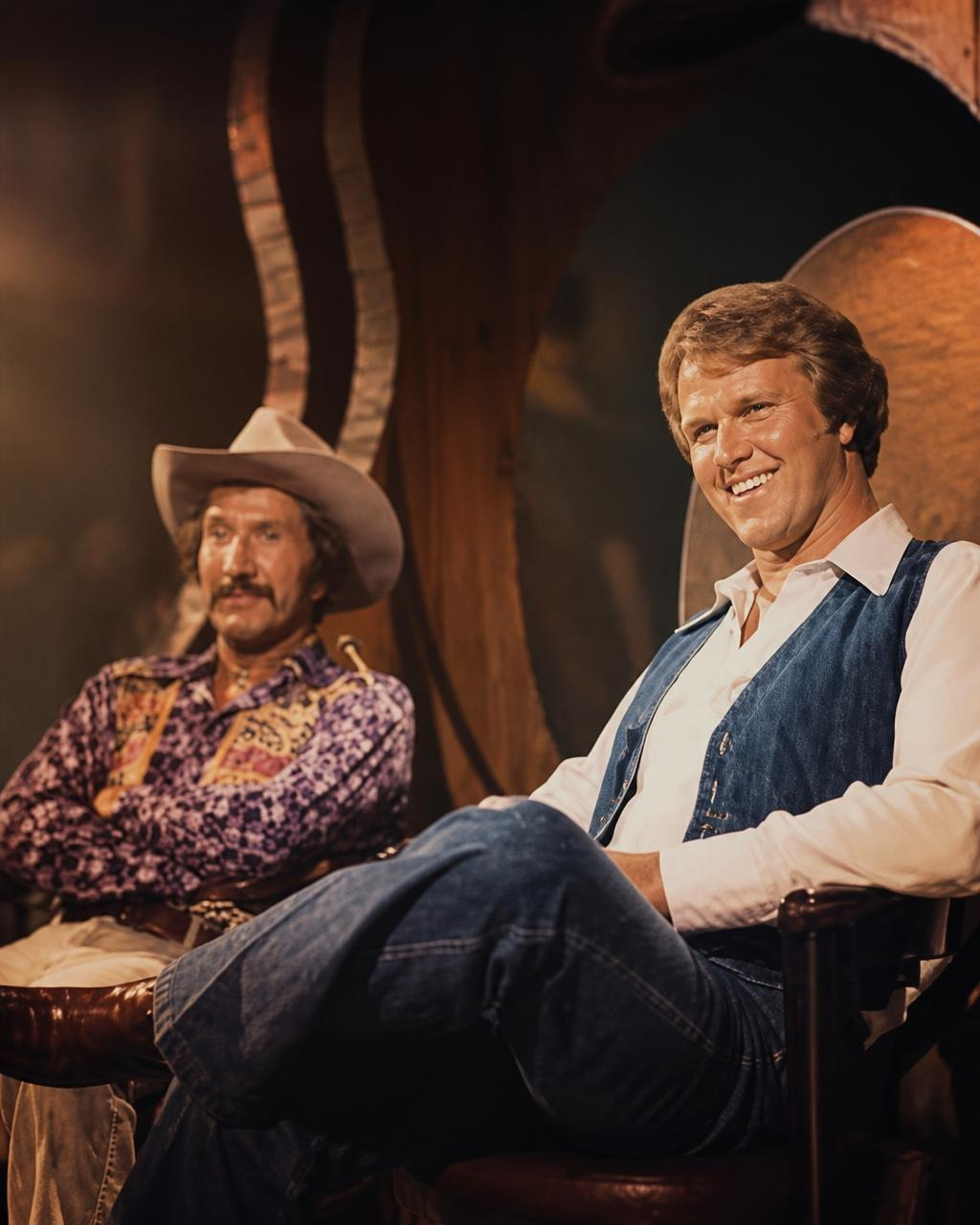
Marty Robbins, Ronny Robbins, and the Voice That Carried a Legacy
On December 2, 1982, Marty Robbins was admitted to St. Thomas Hospital in Nashville with chest pains. Doctors found that a blood clot had blocked a major artery in his heart, and surgeons performed an emergency quadruple bypass to repair damage that reached back to his earlier heart surgery in 1970, when bypass operations were still considered experimental. Six days later, Marty Robbins died at age 57. The loss landed hard because the story had not ended at a career peak. In October 1982, only weeks earlier, Marty Robbins had been inducted into the Country Music Hall of Fame.
By then, Marty Robbins had already become one of the defining voices in country music. “El Paso” had earned him a Grammy and became the song most people remembered first, but it was only one part of a long career that crossed ballads, western stories, and pop success. He was the kind of artist whose songs seemed to arrive with their own weather: dust, distance, heartbreak, and a voice steady enough to carry all of it.
For his son, Ronny Robbins, that legacy was both a gift and a burden. Ronny was 33 when his father died, and he had already recorded for Columbia under the name Marty Robbins Jr. When father and son sang together on television, listeners often said they could barely tell the voices apart. That is a powerful kind of inheritance, but it can also become a trap. How do you build a life when your natural talent sounds like an echo of someone already beloved?
Ronny Robbins chose a different path. Instead of chasing a career built on imitation, he stepped back from the road and took over his father’s company, helping protect the catalog and keep the music available for new generations. That choice says a lot about loyalty and identity. Some children inherit fame. Some inherit responsibility. Ronny Robbins inherited a voice that could have copied the past, but he chose to guard it instead.
The Quiet Work of Preserving a Name
Even now, Ronny Robbins still appears to sing “El Paso” on television from time to time, and the resemblance can be startling. The sound is familiar, but the meaning has changed. It is no longer just the voice of a son following a father. It is the voice of someone who understood that legacy is not only about stepping into the spotlight. Sometimes it is about keeping the light on after the spotlight moves away.
Some sons spend an inheritance. Ronny Robbins guarded his.
That is what makes the Robbins story linger. Marty Robbins left behind more than hits, awards, and a Hall of Fame plaque. He left behind a family name tied to one of country music’s most recognizable sounds. Ronny Robbins answered that inheritance with restraint, care, and loyalty. In a business that often rewards reinvention, he chose preservation. And sometimes, that is its own kind of greatness.