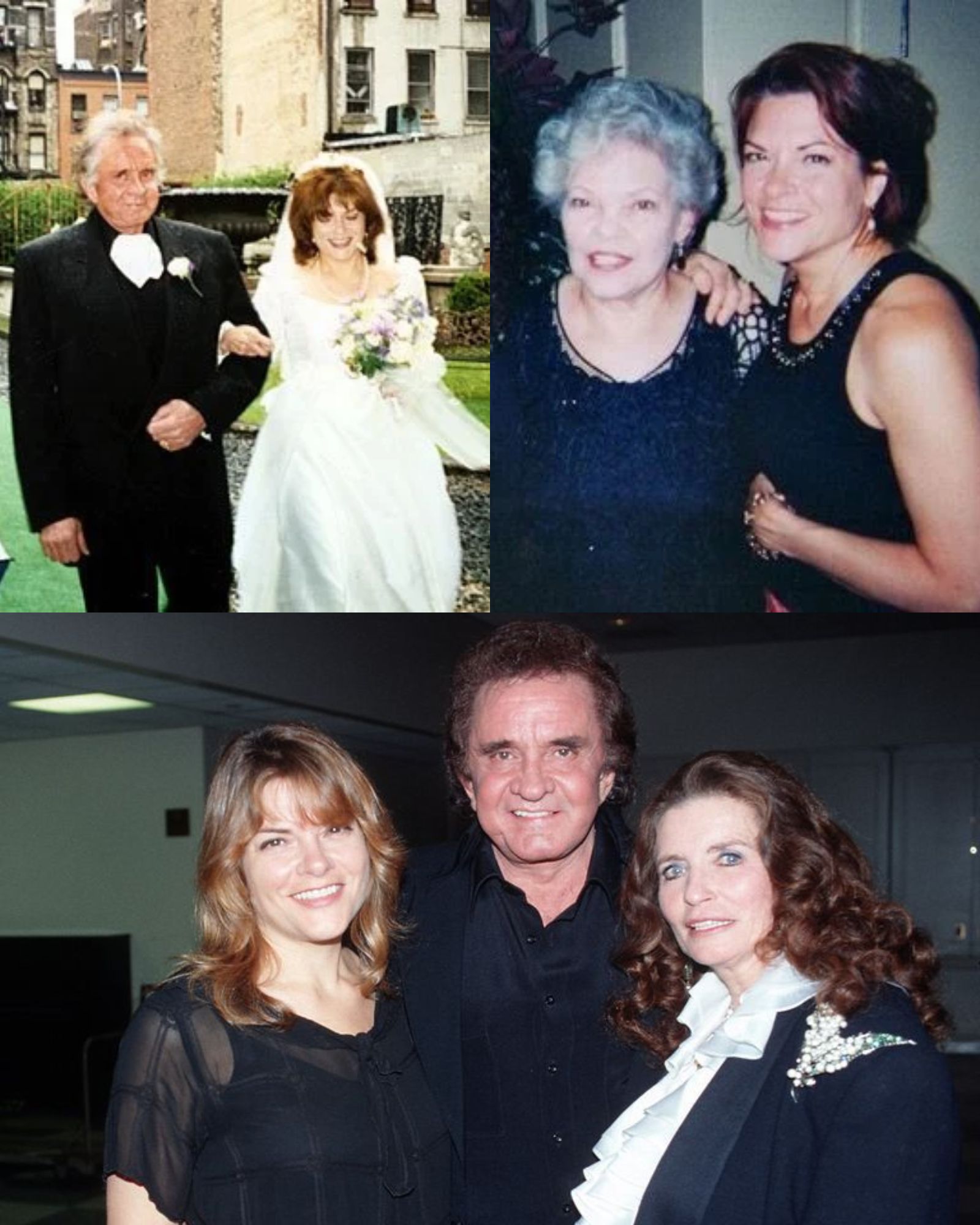
Johnny Cash wasn’t feeling well the morning his daughter Rosanne Cash arrived to record a song with him in Nashville. Rosanne told Johnny Cash that the session could be postponed. There was no reason to push himself.
But Johnny Cash wanted to sing.
What happened inside that small recording studio became one of the most personal moments Rosanne Cash would ever share with her father. And when the song was released in 2003, neither could have known how strangely its title would connect with what happened just a few months later.
A Daughter Facing the Thought of Losing Her Father
By the early 2000s, Rosanne Cash had established a successful recording career of her own. But behind the music, Rosanne was dealing with something familiar to many grown children: the realization that even the strongest parents will not be around forever.
Johnny Cash had experienced recurring health difficulties, and watching those struggles had forced Rosanne to confront the possibility of losing her father.
Those feelings eventually found their way into the lyrics of a song.
Rosanne Cash later explained that the words came from a growing awareness of mortality, unresolved family memories, and the difficult passage from one stage of life into another.
After writing the lyrics, Rosanne left them on a table at home. Rosanne’s husband, musician and producer John Leventhal, discovered the words and began setting them to music.
John Leventhal created a gentle folk melody that seemed to fit the emotions perfectly.
Then John Leventhal suggested something Rosanne Cash hadn’t seriously considered.
Why not ask Johnny Cash to sing on the recording?
Johnny Cash Had One Condition Before Agreeing
Rosanne Cash initially resisted the suggestion.
Rosanne had spent years establishing an identity beyond the famous Cash name. Inviting Johnny Cash onto the record might make people think Rosanne was taking advantage of her father’s reputation.
But John Leventhal continued encouraging the idea, believing this particular song deserved to be shared between father and daughter.
Eventually, Rosanne called Johnny Cash and extended the invitation.
Johnny Cash didn’t immediately agree.
Instead, Johnny Cash wanted to read the lyrics first.
That response made Rosanne laugh. Even when the invitation came from his own daughter, Johnny Cash wanted to understand what the song was saying before putting his voice on it.
After reading the words, Johnny Cash agreed to record the duet.
Rosanne had already recorded her own vocal in New York. Because Johnny Cash wasn’t feeling well, Rosanne traveled to Nashville to record the remaining part at her father’s studio.
The morning after arriving, Rosanne discovered that Johnny Cash was having a difficult day. Rosanne offered to cancel the session.
Johnny Cash insisted on continuing.
Inside the studio, tucked away among the woods near Johnny Cash’s home, the recording began.
Rosanne stood on the other side of the studio glass, watching Johnny Cash sing the words she had written.
Years later, Rosanne remembered tears rolling down her face as she listened.
When the performance ended, Johnny Cash even offered to record the song again if John Leventhal felt the first take wasn’t good enough.
It was a remarkably ordinary gesture from a father who had already spent decades becoming one of the most recognizable voices in American music.
The Song That Took On a New Meaning in September
The finished duet was called “September When It Comes.”
It appeared on Rosanne Cash’s album Rules of Travel, released on March 25, 2003.
The song wasn’t written as a prediction or a planned farewell. Rosanne Cash had originally composed the words as a reflection on aging, memory, mortality, and the uncertainty of what lies ahead.
But hearing Johnny Cash sing about the limitations of growing older gave the recording an extraordinary emotional weight.
Then, on September 12, 2003, Johnny Cash died at the age of 71.
The month named in the song had become the month Rosanne Cash lost her father.
That coincidence gave the recording a meaning nobody had intended when the music was first created.
What began as a daughter’s private reflections had become a lasting musical connection between Rosanne Cash and Johnny Cash.
For listeners, “September When It Comes” offers something different from the famous prison concerts, the booming early hits, and the familiar image of the Man in Black.
It offers the sound of a father and daughter facing a truth every family eventually encounters.
Johnny Cash didn’t need to explain the meaning of the lyrics. Johnny Cash simply understood them and agreed to sing.
And for Rosanne Cash, the recording preserved something no photograph could fully capture: the sound of her father’s voice joining her own in a song about the passing of time.
More than two decades later, that quiet duet remains one of the most moving recordings in the Cash family’s musical history.