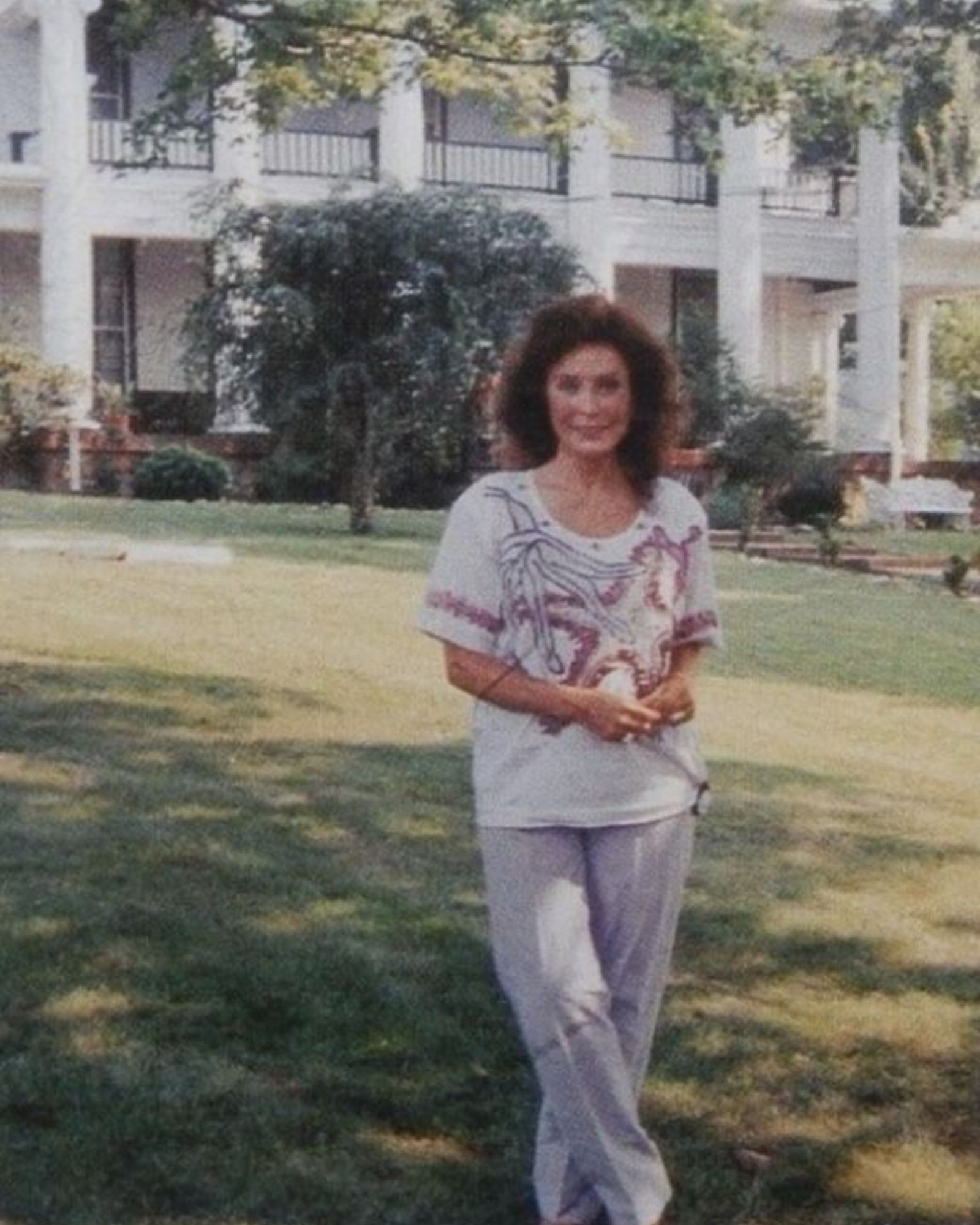
The song is “The Pill,” released in 1975 and still the most controversial record Loretta Lynn ever made. It stopped at No. 5 on Billboard’s country chart, a rare miss for a woman who was then a near-certain bet for the top three, but it climbed to No. 70 on the Billboard Hot 100. No solo single of hers ever went higher on the pop chart.
A song she didn’t write, about a life she lived
“The Pill” was written by Lorene Allen, Don McHan and T.D. Bayless. The narrator is a wife who has spent her married years either pregnant or nursing, and who announces that things are about to change now that she has birth control.
Loretta Lynn did not need to imagine that woman. She married Oliver “Doolittle” Lynn as a teenager in Kentucky and was the mother of six by 1964, the last two a set of twins. She told People in 1975:
“If I’d had the pill back when I was havin’ babies I’d have taken ’em like popcorn.”
In the same breath she said she wouldn’t trade her kids for anyone’s, but she would have spaced them better.
Years later she told Songfacts she never understood the fuss, and that when the pill first came out, she couldn’t afford it.
Three years on the shelf
Loretta Lynn recorded “The Pill” with producer Owen Bradley on December 12, 1972, at Bradley’s Barn in Mount Juliet, Tennessee. Then MCA held it back until early 1975, finally releasing it as the only single from the album Back to the Country.
Birth control had been on the U.S. market since 1960, but country radio had never heard a song that celebrated it.
The sermon, the stations and the Opry
The reaction came fast. People magazine reported that 60 radio stations refused to play the song, and wrote about a preacher in West Liberty, Kentucky, who devoted a sermon to denouncing it. Even so, People reported it was selling about 15,000 copies a week.
The closest call came at the Grand Ole Opry. Loretta Lynn told Playgirl in 1975 that she sang “The Pill” three times on the Opry one night, and only a week later learned what had happened behind the scenes:
“I found out a week later that the Grand Ole Opry had a three-hour meeting, and they weren’t going to let me [sing it]… If they hadn’t let me sing the song, I’d have told them to shove the Grand Ole Opry!”
The Opry did not stop her.
What the doctors said
The response Loretta Lynn mentioned most did not come from radio. In that same Playgirl interview, she said doctors, especially in isolated rural areas, told her the song had done more to spread the word about the pill than all the literature they had put out. That is her account; the doctors themselves were never named.
Where the sources don’t agree
Longtime fans will notice the numbers shift depending on where you look. People’s figure was 60 stations; some later articles say “more than 60.” Loretta Lynn is listed as a co-writer on some recent references, but the original credits name only Allen, McHan and Bayless. Her own age at marriage changed too: for decades she said 13, until a 2012 Associated Press check of records suggested she was about 15. And while the song stalled at No. 5 in the U.S., it went to No. 1 on Canada’s RPM country chart.
What it left behind
“The Pill” drew more attention outside country music than anything Loretta Lynn had cut before. Yet it still barely plays on country stations. TIME, citing Luminate, reported that from January through early October 2022, the month Lynn died at 90, a U.S. country station had played it exactly once.
On stage, she sometimes sang it in a medley with her earlier No. 1 “One’s on the Way,” the song about a worn-out young mother with another baby coming. First the woman who had no choice, then the woman who finally did.
Do you remember the first time you heard “The Pill” on the radio, or the station that wouldn’t play it?