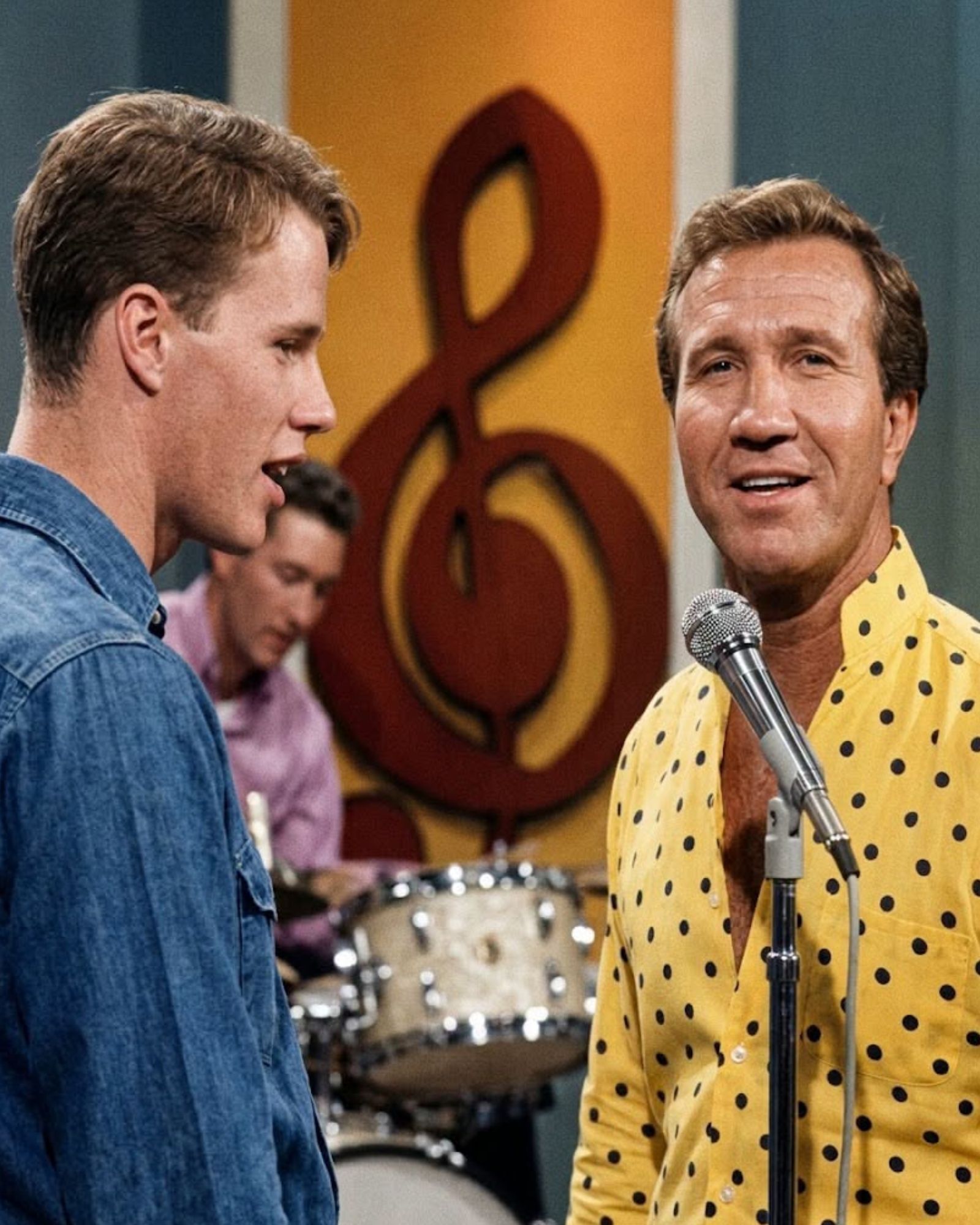
Marty Robbins and the Song That Finally Arrived on the Road to El Paso
Sometimes a great song does not begin with a piano, a studio, or a planned writing session. Sometimes it starts with a city name on a roadside sign and waits patiently for the right moment to become unforgettable. That is the feeling behind Marty Robbins and “El Paso,” one of the most enduring story songs in country music.
According to the story often told about its creation, Marty Robbins first noticed the name El Paso on a family drive home through the Southwest during the holidays. The idea did not fully take shape right away. He remembered the title again on another Christmas trip, and then once more on a third drive in 1957, when the opening line finally came to him. Marty Robbins later described the song as unfolding like a motion picture, with each verse revealing another turn in the story.
That cinematic quality is part of what made “El Paso” feel so different. It is not just a tune; it is a journey through desire, danger, and regret. The song follows a cowboy drawn toward a woman named Feleena, then into violence and heartbreak. Listeners do not simply hear the melody. They travel with the narrator through every decision and consequence.
His son Ronny Robbins remembered the scene at home differently but just as vividly. He recalled sitting in the front seat while Marizona Robbins drove, and Marty Robbins worked from the back with a small guitar and a yellow legal pad, writing quickly as the words came. That image helps explain why “El Paso” feels alive: it was not polished into existence at a desk. It was caught in motion.
The recording was cut in Nashville in April 1959. Columbia Records worried that the song ran too long for radio and released a shorter edit, but the longer version is the one that listeners embraced. Disc jockeys played it anyway, and audiences kept asking for more. In country music, that kind of response can turn a risk into a classic.
“El Paso” became a rare kind of hit: a long narrative ballad that reached the top of the country chart and then crossed over to the pop audience as well. Its success proved that people would sit still for a story if the story was strong enough. Marty Robbins had the gift of making that story feel personal, even to strangers thousands of miles away.
A song that kept driving
What makes the legend of “El Paso” so appealing is the sense of return. A road sign became a memory, a memory became a lyric, and a lyric became a record that outlived the trip that inspired it. The holiday drive, the family car, the desert highway, and the finished song all seem to belong to the same emotional map.
For Marty Robbins, that was the magic of songwriting: noticing something ordinary, holding onto it, and waiting until it asked to be heard. For everyone who has ever felt a phrase linger in the back of the mind, “El Paso” is a reminder that inspiration does not always arrive on schedule. Sometimes it waits three Christmases.