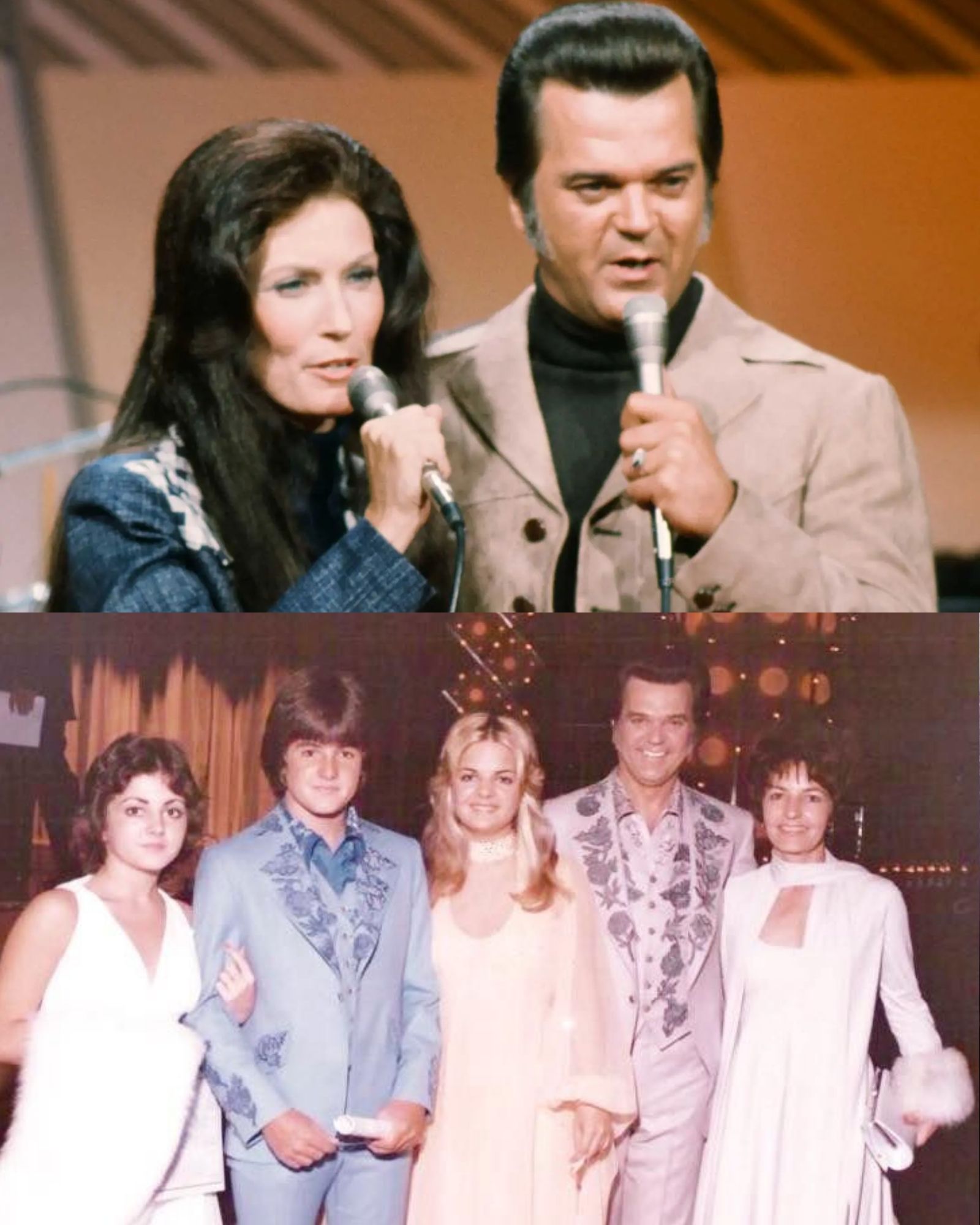
Conway Twitty, Loretta Lynn, and the Love Song Fans Never Quite Stopped Believing
By the 1970s, Conway Twitty and Loretta Lynn had become one of country music’s most famous duet teams. Their records sounded so intimate that listeners often heard more than just harmony. In songs like “After the Fire Is Gone” and “Louisiana Woman, Mississippi Man,” Conway Twitty and Loretta Lynn gave performances that felt like scenes from a private conversation, not just studio sessions.
That was part of the magic. Conway Twitty’s smooth delivery and Loretta Lynn’s plainspoken strength made every line feel lived-in. On record, they sounded like two people who had known each other forever. Off record, that closeness became a story fans wanted to believe was real.
Rumors followed, as they often do when two stars have unusually convincing chemistry. People wondered whether the songs were secretly telling the truth. But those closest to Conway Twitty knew the difference between a performance and a life.
Mickey Twitty Saw the Whole Picture
In 1978, Mickey Twitty addressed the situation in Billboard and made her feelings clear. She did not treat Conway Twitty’s female fans as rivals, and she did not sound uneasy about the attention that came with fame. Her view of marriage was simpler than gossip and stronger than insecurity: there was no room in a marriage for jealousy.
She also spoke directly about Loretta Lynn. For Mickey Twitty, the trust she had in Conway Twitty extended to his friendship with Loretta Lynn. That mattered, because the public had turned their duet partnership into a mystery, even when the people inside it saw something much more ordinary and much more durable.
Conway Twitty said much the same thing. He described Loretta Lynn as one of his closest friends in the business and denied that anything romantic had ever happened between them. Loretta Lynn later said it just as plainly: they were friends, not lovers.
What the Songs Really Meant
That may be the most interesting part of the story. The records sounded like love affairs, but the truth behind them was more grounded. Conway Twitty and Loretta Lynn were professional partners who understood timing, storytelling, and emotional honesty. They knew how to sell a feeling without turning it into a confession.
Mickey Twitty understood that too. She recognized the difference between the sparkle of performance and the reality of home. When the singing was over, Conway Twitty came back. And that, more than any rumor, was the part that mattered.
Sometimes the strongest kind of trust is the kind that does not need to argue with the spotlight.
Looking back, the fascination makes sense. Conway Twitty and Loretta Lynn were persuasive because they were good. Mickey Twitty’s response was persuasive for the same reason. She did not need drama to make her point. She trusted the marriage, trusted the friendship, and trusted that a great duet could stay exactly what it was: music.