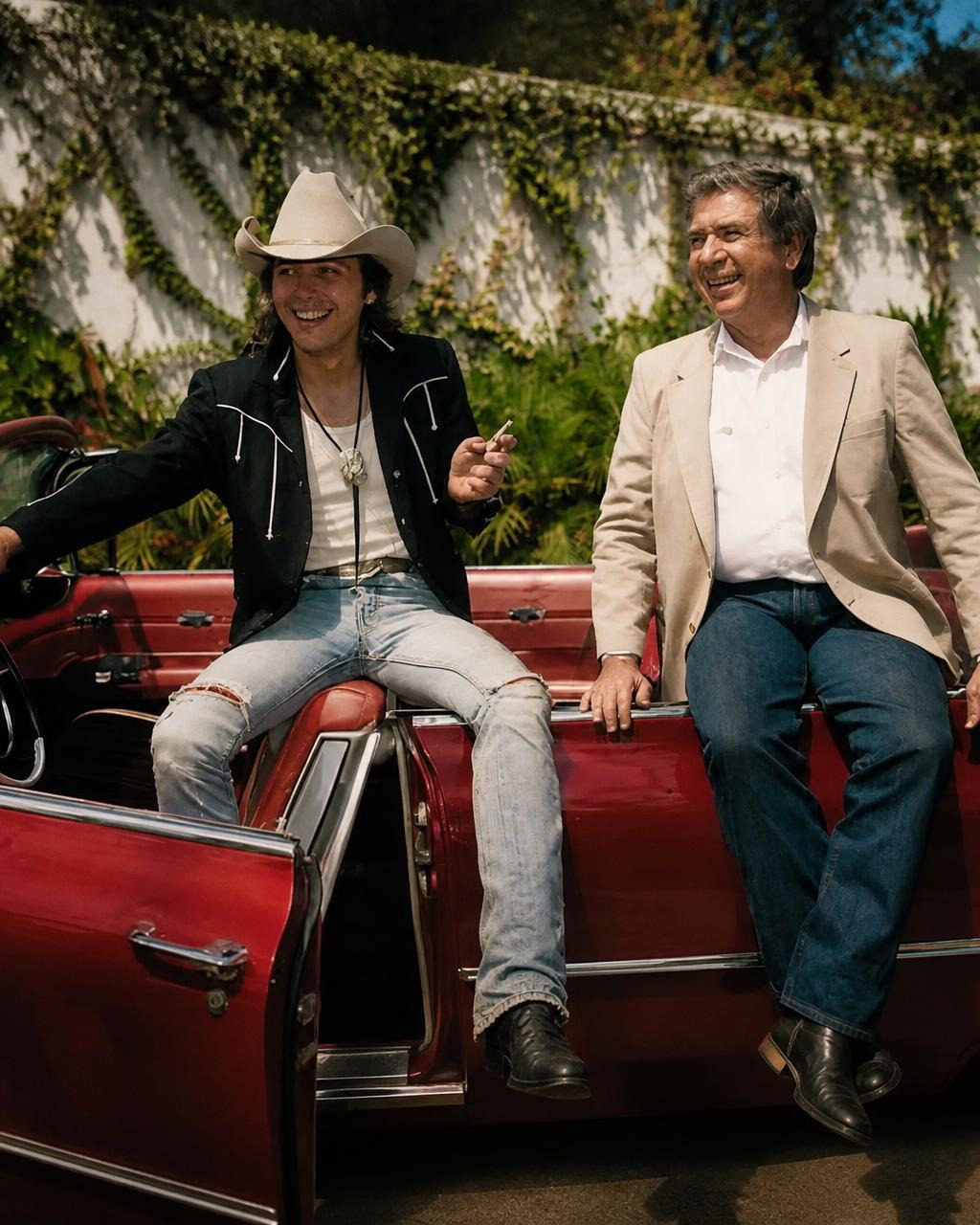
How Dwight Yoakam Helped Buck Owens Return to the Top with “Streets of Bakersfield”
In 1987, Dwight Yoakam arrived in Bakersfield with a clear purpose and a deep respect for the man who helped define the city’s country sound. He did not call ahead. He walked into Buck Owens’ office and asked a legend who had been away from recording for years to sing with him that very night. Buck Owens said yes.
That simple decision opened a door neither man could have predicted. Dwight Yoakam was playing a local county fair, and his band already knew Buck Owens’ songs well. When Buck Owens stepped back into the spotlight, he was not just revisiting old memories. He was hearing the sound he had helped create come alive again, in front of a new crowd, with a younger artist who understood exactly why it mattered.
A Night That Changed Two Careers
Buck Owens had spent years away from the center of the recording world, but the chemistry onstage was immediate. Dwight Yoakam had grown up admiring the Bakersfield Sound, the hard-edged, dancehall-friendly style that Buck Owens made famous. For Dwight Yoakam, this was more than a tribute. It was a chance to stand beside his hero and help carry that music forward.
That night eventually led to one of country music’s most memorable duets: “Streets of Bakersfield.” The song had already lived a previous life. Homer Joy wrote it, and Buck Owens had recorded it in the early 1970s without turning it into a major hit. In 1988, Dwight Yoakam returned to it with Buck Owens and gave it a new spark.
The Sound That Brought It Back
The recording worked because it respected the past without sounding stuck in it. Pete Anderson shaped the track with a lively Tex-Mex feel, and Flaco Jiménez’s accordion added color and motion throughout the song. The arrangement felt loose, urgent, and full of life, as if the music itself knew it was carrying something bigger than a single release.
When “Streets of Bakersfield” reached No. 1 in 1988, it became Buck Owens’ first chart-topper in 16 years. For a veteran artist who had already done so much to shape country music, the comeback carried real emotional weight. It was not just a hit. It was proof that the sound Buck Owens helped build still had power, especially in the hands of someone who truly understood it.
A Bridge Between Generations
The duet became a rare and moving example of one generation lifting another. Dwight Yoakam did not simply borrow from Buck Owens’ legacy. He helped restore it in public view, turning admiration into action and history into a new moment. For listeners, the result was more than nostalgia. It was a reminder that great country music can travel through time without losing its identity.
Dwight Yoakam brought Buck Owens back to the top by honoring the past and making it feel urgent again.
What began as an unannounced visit in Bakersfield became a turning point. One song, one duet, and one shared stage gave country fans something lasting: a meeting of old fire and new belief. And for Buck Owens, it meant the music that once made him a star found its way back home.