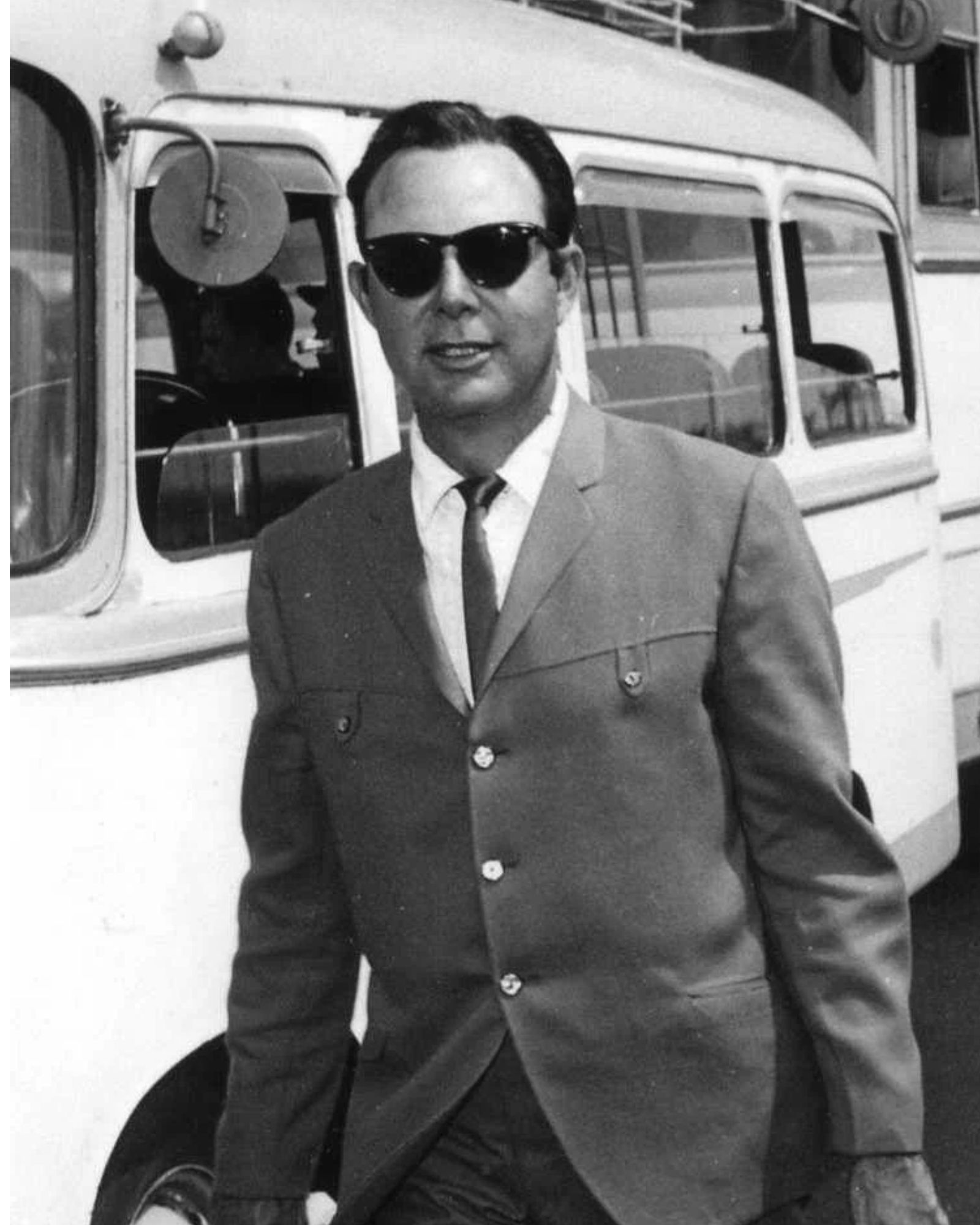
On July 31, 1964, country music lost one of its most recognizable voices. Jim Reeves was flying toward Nashville when the small plane crashed during bad weather. Jim Reeves was only 40 years old. Pianist and road manager Dean Manuel, who was traveling with Jim Reeves, also died in the accident.
For millions of listeners, the news seemed impossible to accept. The man whose gentle baritone had brought comfort to countless homes was suddenly gone.
But something remarkable happened after Jim Reeves died. The recordings continued reaching new audiences, and in 1966, a song that Jim Reeves had recorded before the tragedy became a major international hit.
Two years after the plane crash, Jim Reeves spent five consecutive weeks at No. 1 on the British singles chart.
The story behind that achievement reveals something extraordinary about the career of the singer known as Gentleman Jim.
Before the Gentle Voice, There Was a Different Jim Reeves
Born in Texas in 1923, Jim Reeves originally dreamed of a professional baseball career. After a leg injury ended those ambitions, Jim Reeves found opportunities in radio and country music.
Early recordings such as “Mexican Joe” helped establish Jim Reeves as a rising country performer. In 1955, Jim Reeves joined the Grand Ole Opry.
But the early Jim Reeves sounded noticeably different from the singer remembered today.
During the first part of the recording career, Jim Reeves often used a stronger, more traditional country delivery. That began changing as Nashville producers experimented with smoother arrangements designed to reach audiences beyond country radio.
One song would help bring that transformation into focus.
The 1957 Recording That Changed Everything
In February 1957, Jim Reeves recorded “Four Walls” with producer Chet Atkins and a group of accomplished Nashville musicians, including pianist Floyd Cramer and guitarist Chet Atkins.
Rather than delivering the song with the forceful approach heard on some earlier recordings, Jim Reeves sang in a lower register, closer to the microphone.
The result was intimate and unusually personal.
“Four Walls” reached No. 1 on the country chart and crossed into the pop market. It helped establish the warm, restrained sound that would become Jim Reeves’ signature.
Working closely with Chet Atkins, Jim Reeves became an important voice in the emerging Nashville Sound, a musical approach that brought country music into millions of additional homes.
In 1959, Jim Reeves recorded “He’ll Have to Go,” another landmark performance. The single topped the country chart and reached No. 2 on the American pop chart in 1960.
With its telephone conversation and understated heartbreak, “He’ll Have to Go” demonstrated how much emotion Jim Reeves could communicate without raising the volume.
The Unreleased Song That Became a Worldwide Hit
Among the songwriters closely associated with Jim Reeves was Cindy Walker, whose compositions included “Anna Marie,” “This Is It,” and “Distant Drums.”
“Distant Drums” told the story of a man facing the possibility of separation from a loved one because of military duty.
Jim Reeves recorded an early version of the song before the fatal plane crash. The recording was not initially released as a commercial single. According to accounts of the song’s history, the original performance was intended as a demonstration for Cindy Walker.
After Jim Reeves died, the recording was revisited. Additional instrumental backing was added, and RCA released “Distant Drums” in 1966.
What followed was extraordinary.
On September 22, 1966, “Distant Drums” reached No. 1 on the British singles chart. The song remained at the top for five consecutive weeks and spent 25 weeks on the chart overall.
It also reached No. 1 on the American country chart.
At a time when British pop music was changing rapidly, a recording by a country singer who had died two years earlier was competing successfully with some of the biggest names in popular music.
A Career That Continued After the Final Goodbye
“Distant Drums” was not the only successful recording released after Jim Reeves’ death.
Other songs, including “This Is It” and “Blue Side of Lonesome,” helped extend the recording career beyond 1964. Jim Reeves continued appearing on the country charts for years, demonstrating the lasting appeal of the recordings.
In 1967, Jim Reeves was inducted into the Country Music Hall of Fame, recognizing a career that had helped change the sound and international reach of country music.
Yet the real legacy was never measured only by chart positions or awards.
Why Jim Reeves Still Sounds Like Home
For listeners who remember hearing “He’ll Have to Go,” “Four Walls,” “Welcome to My World,” or “Distant Drums” on an old family radio, those recordings can bring back an entire period of life.
A familiar melody may recall a childhood kitchen, a long drive with parents, or a record played on a quiet Sunday afternoon.
That is part of what made Jim Reeves different. The songs rarely demanded attention through sheer volume. Instead, Jim Reeves created a sense of closeness, as though the singer were speaking directly to one listener.
More than six decades after the fatal flight near Nashville, the recordings remain available to anyone discovering that unmistakable voice for the first time.
Jim Reeves never lived to hear “Distant Drums” reach No. 1 in Britain. But the achievement proved something that generations of fans have continued to understand: the final performance of a singer does not have to be the final chapter of the music.