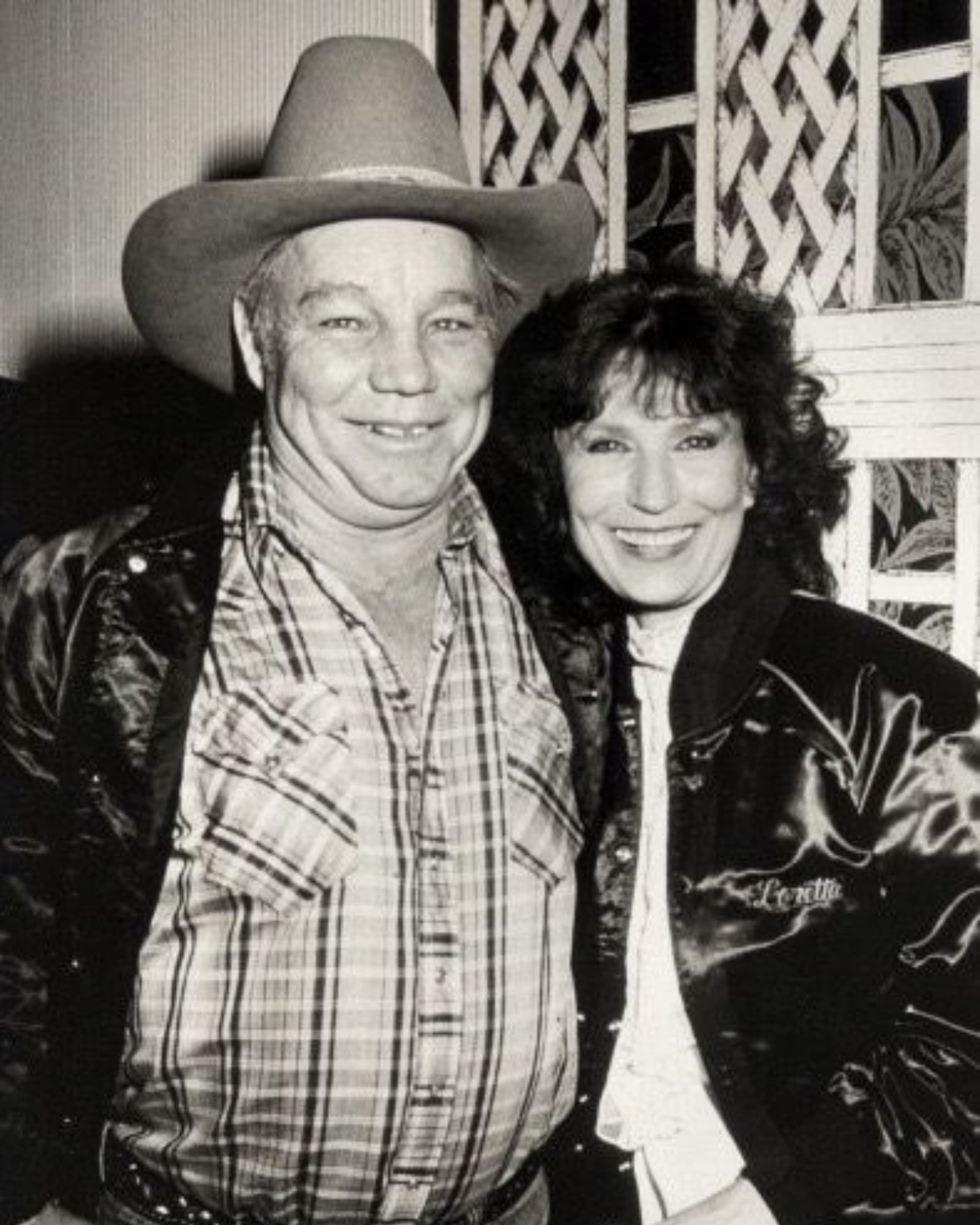
When Doolittle “Doo” Lynn told Loretta Lynn that the music was disappearing, Loretta misunderstood what was happening.
For nearly five decades, music had been part of their marriage. Doo had encouraged Loretta to sing, bought Loretta the first guitar, and helped turn a young Kentucky housewife into one of country music’s most recognizable voices.
Now Doo kept saying that the music could no longer be heard.
At first, Loretta thought Doo wanted the singing to stop. Loretta later admitted that giving up music would have been an option if that was what Doo truly wanted.
But the problem was something neither had fully understood. Doo was losing the ability to hear.
The Final Weeks at Hurricane Mills
By the summer of 1996, Doo’s health had deteriorated significantly. Years of illness had left Doo dependent on a wheelchair, and Loretta had already stepped away from much of the career that once kept the singer traveling across America.
For years, caring for Doo had become Loretta’s daily priority. Concerts and recording sessions no longer came first.
Two weeks before Doo’s death, Loretta took Doo to get a pair of small hearing aids.
In a 2000 interview with No Depression, Loretta remembered that Doo had also been struggling with eyesight. Glasses had been obtained, but Doo would not wear them. Loretta gradually understood how much hearing and vision had deteriorated.
Doo died in August 1996, ending a marriage that had lasted almost 48 years.
It had never been a perfect marriage. Loretta had spoken openly about drinking, arguments, and difficult years together. But Doo had also been a major influence on Loretta’s earliest musical ambitions.
After the funeral, Loretta struggled to return to ordinary life, much less the demands of performing. In later interviews, Loretta described losing track of time during the months following Doo’s death.
A Song Born From Doo’s Words
In 2000, Loretta Lynn returned with Still Country, the first solo album of new material in twelve years.
Produced by Randy Scruggs, the album marked an important return to recording. Among its tracks was one of the most personal songs Loretta had ever made: “I Can’t Hear the Music.”
Written by Loretta Lynn with Cody James and Kendal Franceschi, the song turned Doo’s words into an expression of losing a husband whose encouragement had helped shape an entire career.
For Doo, not hearing the music had been a physical reality. For Loretta, the same words had acquired an entirely different meaning after Doo’s death.
The song remembered a husband who could be a demanding critic but also a devoted supporter of Loretta’s singing.
That history made the recording unusually difficult.
The 45 Minutes Loretta Couldn’t Sing
During the recording session, Loretta Lynn repeatedly broke down in tears.
In the June 2000 interview with No Depression, Loretta explained that the song had to be recorded almost one line at a time because the memories were overwhelming.
At one point, the session had to wait approximately 45 minutes before Loretta could finish the last chorus.
Producer Randy Scruggs knew that pushing harder would not necessarily solve the problem. Randy suggested that Loretta concentrate on something personally desirable rather than the words of the song.
The answer was surprisingly ordinary.
The Snickers Bar That Saved the Final Chorus
Loretta Lynn had not eaten all day.
There was a Snickers candy bar in the studio vending machine, and Loretta wanted it.
So Loretta made a simple bargain: finish the chorus, then get the candy bar.
Instead of concentrating entirely on the painful memories behind the lyrics, Loretta focused on that small reward.
The approach worked.
Loretta returned to the microphone and completed the recording. Some of the crying remained in the finished performance, but Loretta later pointed out that the final chorus sounded stronger than the first.
In an October 2000 interview with Nashville Scene, Loretta explained that thinking about the candy bar had made that difference.
What Remained on the Record
“I Can’t Hear the Music” appeared on Still Country in September 2000, four years after Doo’s death.
For listeners, the recording offered something more personal than a conventional country ballad about losing someone. Its story came directly from a conversation Loretta Lynn had once misunderstood, during the last weeks of a long and complicated marriage.
And the vocal performance carried evidence of just how difficult that story had been to sing.
There was no elaborate studio trick behind the stronger final chorus. Randy Scruggs offered a practical suggestion, Loretta Lynn thought about a Snickers bar, and the recording was finished.
The tears were still there for anyone listening closely.