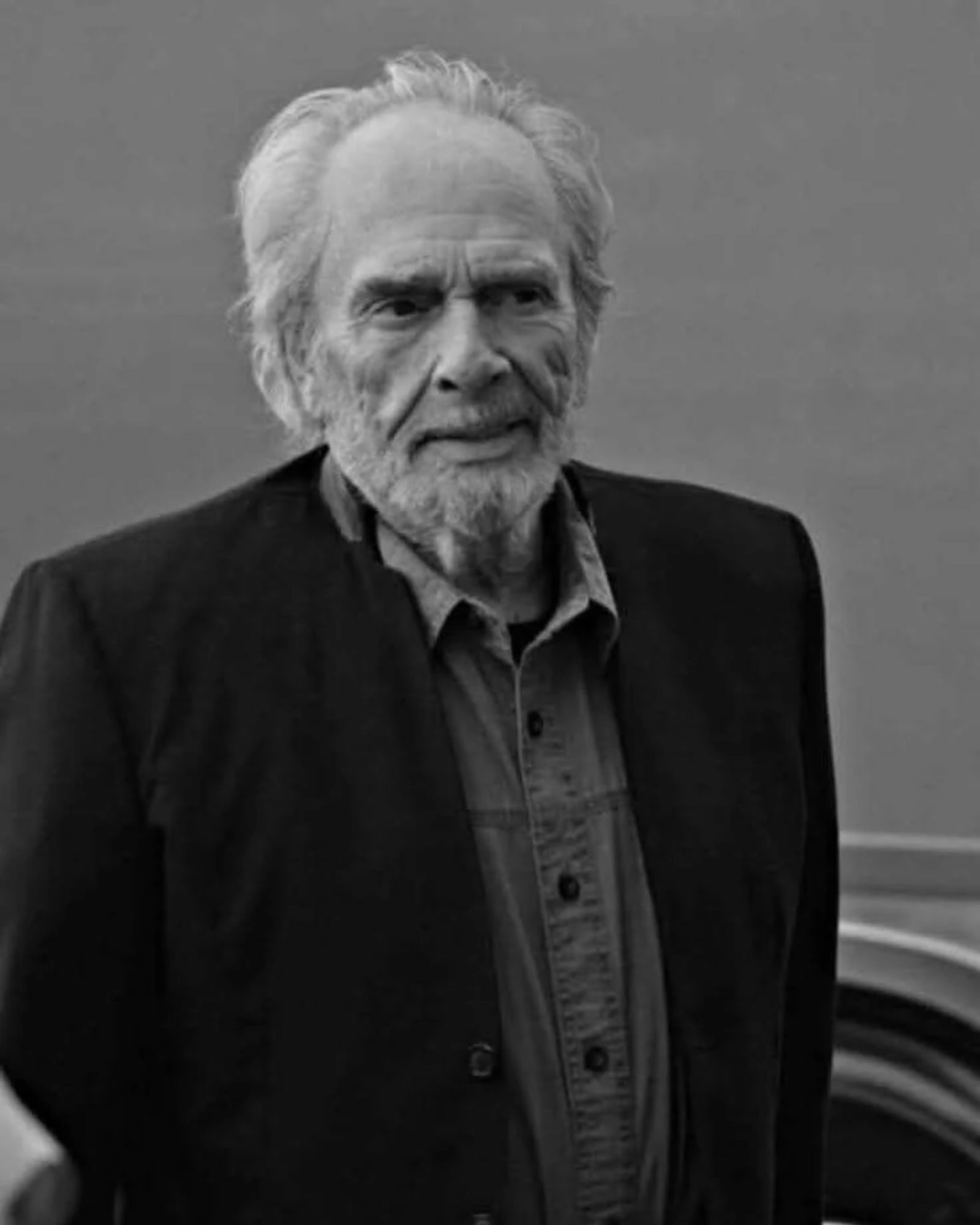
On February 9, 2016, Merle Haggard walked into a recording studio near his Northern California home and recorded a song about leaving Bakersfield. Less than two months later, the country music legend would be gone.
The recording was called “Kern River Blues.” It would become the final song Merle Haggard ever recorded.
What makes the song particularly meaningful is one small detail near the end: a goodbye to an old railroad boxcar. For Merle Haggard, that boxcar was not simply a piece of songwriting imagery. It was a real place, and a large part of Merle Haggard’s childhood had been spent inside it.
A Childhood Home Made From a Railroad Car
Long before the hit records, sold-out concerts, and Country Music Hall of Fame recognition, the Haggard family lived in Oildale, California, just outside Bakersfield.
In 1935, Merle Haggard’s father, James Haggard, purchased an old railroad boxcar for approximately $500 and converted it into a family home.
The family made the unusual house comfortable. James Haggard added living space and other improvements. Merle Haggard’s mother, Flossie Mae, planted fruit trees, climbing roses, and a grape arbor around the property.
There was even a Thanksgiving dinner when Flossie Mae reportedly prepared a meal for 22 people inside the modest home.
For Merle Haggard, Oildale was where childhood unfolded and where an early understanding of working-class life took shape. Those experiences would later find their way into many of Merle Haggard’s songs.
One Last Visit to the Old Boxcar
On July 29, 2015, something remarkable happened in Bakersfield.
After years of efforts to preserve Merle Haggard’s childhood home, the old railroad boxcar was moved from Oildale to the Kern County Museum.
Merle Haggard attended the occasion with his older sister, Lillian Haggard Rea, and other family members.
As the historic home traveled toward the museum on a flatbed truck, Merle Haggard followed in a tour bus.
More than seven decades after the Haggard family had made that railroad car a home, the building was being saved for future generations.
The museum eventually restored the structure as the Haggard House exhibit, preserving a physical reminder of the humble surroundings that helped shape one of country music’s greatest songwriters.
Only months later, the same old boxcar would appear in Merle Haggard’s final recording.
February 9, 2016: The Last Studio Recording
During the winter of 2015 and 2016, Merle Haggard experienced serious bouts of pneumonia that forced the cancellation of several scheduled performances.
Doctors had advised Merle Haggard to rest and spend less time traveling. But songwriting continued, including work on new material during periods of hospitalization.
Back at the ranch in Northern California, Merle Haggard had access to a recording studio across the road.
On February 9, Merle Haggard recorded “Kern River Blues” with familiar musicians, including son Ben Haggard on electric guitar.
The song used a relaxed blues rhythm influenced by Jimmie Rodgers, one of Merle Haggard’s longtime musical heroes.
Rather than celebrating fame or looking back over an entire career, Merle Haggard returned to Bakersfield, the city that had helped shape both the music and the man.
The Meaning Behind “Kern River Blues”
The song reflected Merle Haggard’s memories of leaving Bakersfield in the late 1970s and the changes that had taken place in the surrounding community.
There were references to Oildale, the Kern River, and the passing of an older California that Merle Haggard remembered from childhood.
Near the end came six simple words:
“Kiss an old boxcar goodbye.”
For listeners who know the history of the Haggard family’s railroad home, those words carry an additional meaning.
Merle Haggard had watched that very home being preserved just months earlier. Now, in the final recording, Merle Haggard was singing about leaving the place where so much of life had begun.
The song was written about Bakersfield, not explicitly as a farewell to life. There is no confirmed evidence that Merle Haggard intended it to be a final message. But the circumstances surrounding its recording give the words a particular poignancy today.
The Last Performances and a Birthday Farewell
The February recording was not Merle Haggard’s final public musical appearance.
Two days later, Merle Haggard performed alongside Kris Kristofferson in Beverly Hills. Another performance followed in Oakland on February 13, 2016, which became Merle Haggard’s final public concert.
Further performances were canceled as health problems continued.
On April 6, 2016, Merle Haggard died at home in Northern California, on the very day of Merle Haggard’s 79th birthday.
For country fans, the loss marked the end of an extraordinary career. For Merle Haggard’s family, there was still one recording that listeners had not heard.
One Final Song for the Fans
Following the enormous outpouring of affection and prayers after Merle Haggard’s death, the family decided to share “Kern River Blues” as a thank-you to the fans.
On May 12, 2016, the recording premiered on Willie Nelson’s SiriusXM channel, Willie’s Roadhouse. The station had temporarily renamed itself Merle’s Roadhouse during the weekend following Merle Haggard’s death.
The song was subsequently made available for purchase, with 10 percent of gross proceeds designated for charities helping people experiencing homelessness.
It was a fitting way for a songwriter so closely associated with ordinary working people to leave one more piece of music behind.
Today, the childhood railroad home remains preserved at the Kern County Museum in Bakersfield.
And in “Kern River Blues,” Merle Haggard’s final studio recording, that same boxcar lives on in a song.
After decades of singing about home, hardship, memory, and the changing American landscape, Merle Haggard’s last recording returned to a place that had been there almost from the beginning.