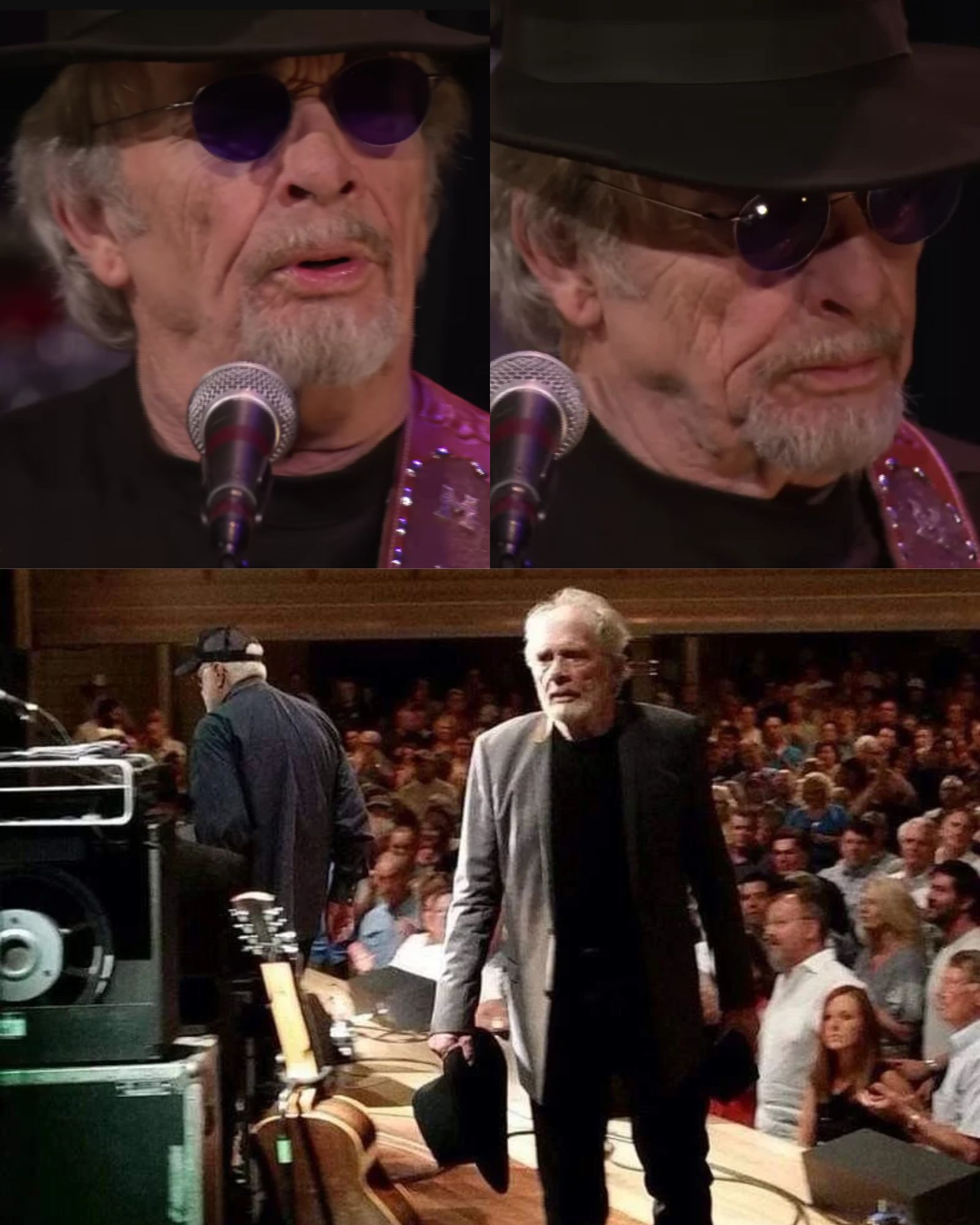
Before Merle Haggard became one of country music’s most respected songwriters, Merle Haggard was offered a chance to escape from San Quentin State Prison. The plan involved a large wooden desk, a fellow inmate nicknamed Rabbit, and a decision that Merle Haggard would remember for the rest of his life.
Years later, that same inmate would become part of the story behind one of Merle Haggard’s most heartbreaking recordings.
A Prison Escape Hidden Inside a Judge’s Desk
In the late 1950s, Merle Haggard was serving a sentence at San Quentin in California. Years of trouble with the law had finally caught up with the young musician, who had already developed a reputation for escaping from correctional institutions.
Among the inmates Merle Haggard knew was James “Rabbit” Kendrick, a man determined to get out.
Rabbit devised an unusual escape plan. Prison workers were building an enormous desk for a San Francisco judge. The desk offered enough room to conceal a prisoner, who could break out after the furniture had been transported beyond the prison walls.
Rabbit invited Merle Haggard to participate. But Rabbit also recognized something important about the young man’s musical talent.
As Merle Haggard later explained in interviews and in the 1981 autobiography Merle Haggard: Sing Me Back Home, the men involved in the escape believed Merle Haggard might still have a future outside prison. They encouraged Merle Haggard to reconsider.
After thinking about the decision, Merle Haggard stayed behind.
Rabbit went ahead with the escape, and the plan worked.
The Escape That Ended in Tragedy
Rabbit’s freedom did not last.
On February 23, 1960, California Highway Patrol officer Richard Duvall stopped Rabbit near Victorville, California. Rabbit shot and killed the officer. The murder led to Rabbit’s capture, prosecution, and eventual death sentence.
Merle Haggard never treated the killing as something to celebrate. An officer had lost his life, and Rabbit’s actions had consequences that could not be undone.
But Merle Haggard also remembered the man known inside San Quentin.
In the autobiography, Merle Haggard described waiting in the prison yard with other inmates when Rabbit was brought back.
Rabbit initially stared straight ahead as the guards escorted the prisoner through the yard. As Rabbit approached the familiar faces, Rabbit made a small motion with one hand.
The men waved back.
It was a brief exchange, but Merle Haggard remembered the moment decades later.
Merle Haggard was released from San Quentin in 1960. Rabbit was executed in 1961, after Merle Haggard had already left prison.
How a Prison Memory Became a Country Classic
Several years later, Merle Haggard wrote Sing Me Back Home, drawing on memories of Rabbit and the condemned prisoners Merle Haggard had encountered at San Quentin.
The song tells of a prisoner being escorted toward execution. Before the journey ends, the condemned man asks a fellow inmate to sing something familiar, a song that might bring back memories of home and earlier days.
The scene was a songwriter’s creation, not a literal account of Merle Haggard performing for Rabbit before the execution.
Yet the emotional foundation was real.
Merle Haggard understood prison life firsthand. Merle Haggard knew what it meant to live behind locked doors, to see men facing terrible consequences, and to remember people whose lives had ended differently.
Released as a single in 1967, Sing Me Back Home reached No. 1 on the country chart. The recording also became the title track of Merle Haggard’s 1968 album.
A Song Merle Haggard Never Completely Left Behind
In a 1995 interview with Terry Gross, Merle Haggard recalled the escape that never happened and acknowledged how fortunate the decision to remain in San Quentin had been.
Merle Haggard went on to build an extraordinary career. Rabbit never had another opportunity to begin again.
That history gives Sing Me Back Home a meaning that goes beyond its beautiful melody.
The song does not excuse Rabbit’s crime or erase the life of officer Richard Duvall. Instead, it reflects the complicated memories Merle Haggard carried out of prison.
When Merle Haggard sang about a condemned man’s final request, the story came from more than imagination. Behind the recording was a real prison, a failed life, a decision not to escape, and the memory of one small wave across the San Quentin yard.