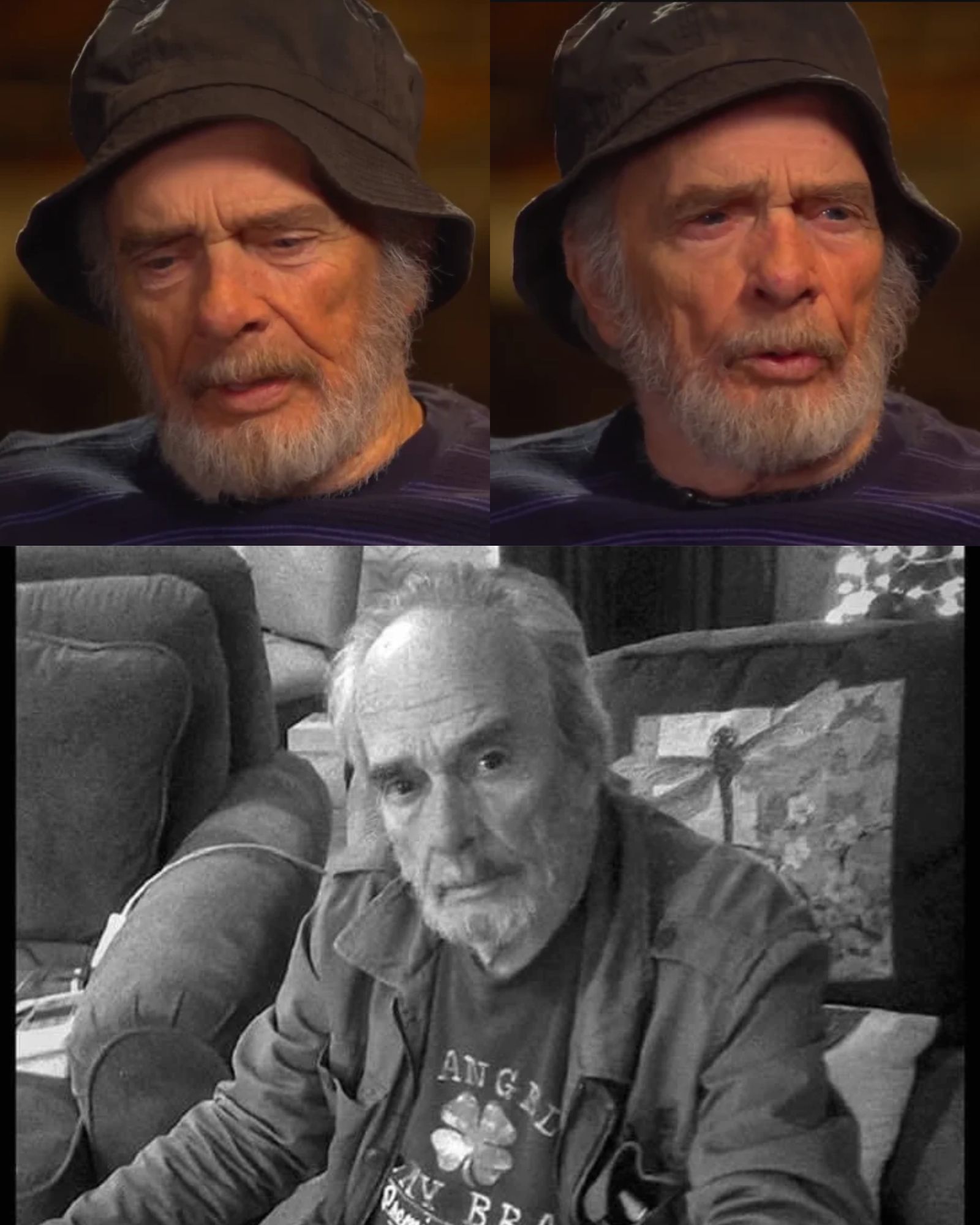
In September 2013, Merle Haggard was 76 years old, a member of the Country Music Hall of Fame, and one of the most respected voices in American country music. After decades on the road, Merle Haggard had earned the right to retire whenever Merle Haggard pleased.
But during an interview with veteran journalist Dan Rather, Merle Haggard admitted something surprisingly personal.
“I’m scared of the loneliness. It could get awful quiet, awful quick.”
For a man who had survived San Quentin prison, rebuilt a troubled life, and performed before countless thousands of people, the admission was striking. Yet the most revealing part of the conversation came when Dan Rather asked why someone surrounded by so much family could still feel that way.
A Question About Retirement That Became Something More
Dan Rather met Merle Haggard in Franklin, North Carolina, where Merle Haggard was preparing for a sold-out performance at the Smoky Mountain Center for the Performing Arts.
Merle Haggard had traveled overnight from a concert in Ohio. After the North Carolina show, another journey awaited: approximately 550 miles to Chester, West Virginia, for another performance the following evening.
It was the kind of schedule Merle Haggard had followed for decades.
Dan Rather wondered why Merle Haggard continued working so hard when financial necessity no longer required it.
Merle Haggard explained that retirement could mean losing the regular company of people. As friends and acquaintances grew older and disappeared from everyday life, the world could become increasingly quiet.
Performing offered something retirement could not guarantee. There were musicians to work with, audiences to entertain, songs to practice, and another place to visit.
Merle Haggard believed that continuing to perform and maintaining high musical standards helped keep Merle Haggard engaged with life.
The Family Question Merle Haggard Didn’t Avoid
Dan Rather wasn’t entirely satisfied with the explanation.
After all, Merle Haggard wasn’t living without family.
Merle Haggard was married to Theresa Ann Lane. The couple had children together, and Merle Haggard had six children altogether. There were grandchildren, great-grandchildren, and even great-great-grandchildren.
Merle Haggard also shared the stage with family members. Theresa sang background vocals, while their son Ben Haggard had joined Merle Haggard’s band as a teenage guitarist.
So Dan Rather returned to the question: How could someone with such a large family be frightened of loneliness?
Merle Haggard’s response revealed a concern that fame and success had never completely resolved.
Speaking about the younger generations of the family, Merle Haggard acknowledged that there were great-grandchildren Merle Haggard did not really know.
Merle Haggard also worried about something more delicate: whether expressions of love from relatives were always sincere, or whether being a famous and financially successful family member complicated those relationships.
It was Merle Haggard’s personal fear, not an accusation proving that the family lacked affection. But hearing such uncertainty from a country legend made the conversation unusually revealing.
Why the Audience Felt Different
Merle Haggard drew an interesting distinction between family relationships and the relationship with an audience.
Family connections could involve complicated expectations, personal histories, and questions that weren’t easily answered.
Concert audiences, Merle Haggard suggested, generally came for something straightforward: a performance.
Fans bought tickets because they wanted to hear the familiar voice and songs that had accompanied their own lives. Their expectations were understandable, and Merle Haggard knew how to meet them.
That connection had been built over a career that included songs such as Mama Tried, Silver Wings, and Sing Me Back Home.
The road wasn’t always easy. But the routine offered companionship, purpose, and a direct relationship with people who appreciated the music.
This didn’t mean Merle Haggard loved audiences more than family. It meant the two relationships offered different kinds of connection.
The Road Merle Haggard Kept Traveling
Merle Haggard continued performing into the final years of life. Even as touring became increasingly difficult, Merle Haggard remained closely attached to the stage and the musicians who had shared so many miles.
Merle Haggard died on April 6, 2016, the same day Merle Haggard turned 79.
Looking back at the 2013 conversation, one detail stands out.
After the North Carolina concert, the equipment was packed away, and Merle Haggard boarded the bus for another 550-mile journey.
For the fans, it was another opportunity to hear a country music legend. For Merle Haggard, it was also another day of doing the work that had given life meaning for more than half a century.
And perhaps that explains why, when Dan Rather asked about retirement, Merle Haggard didn’t talk about record sales, money, or applause.
Merle Haggard talked about loneliness.