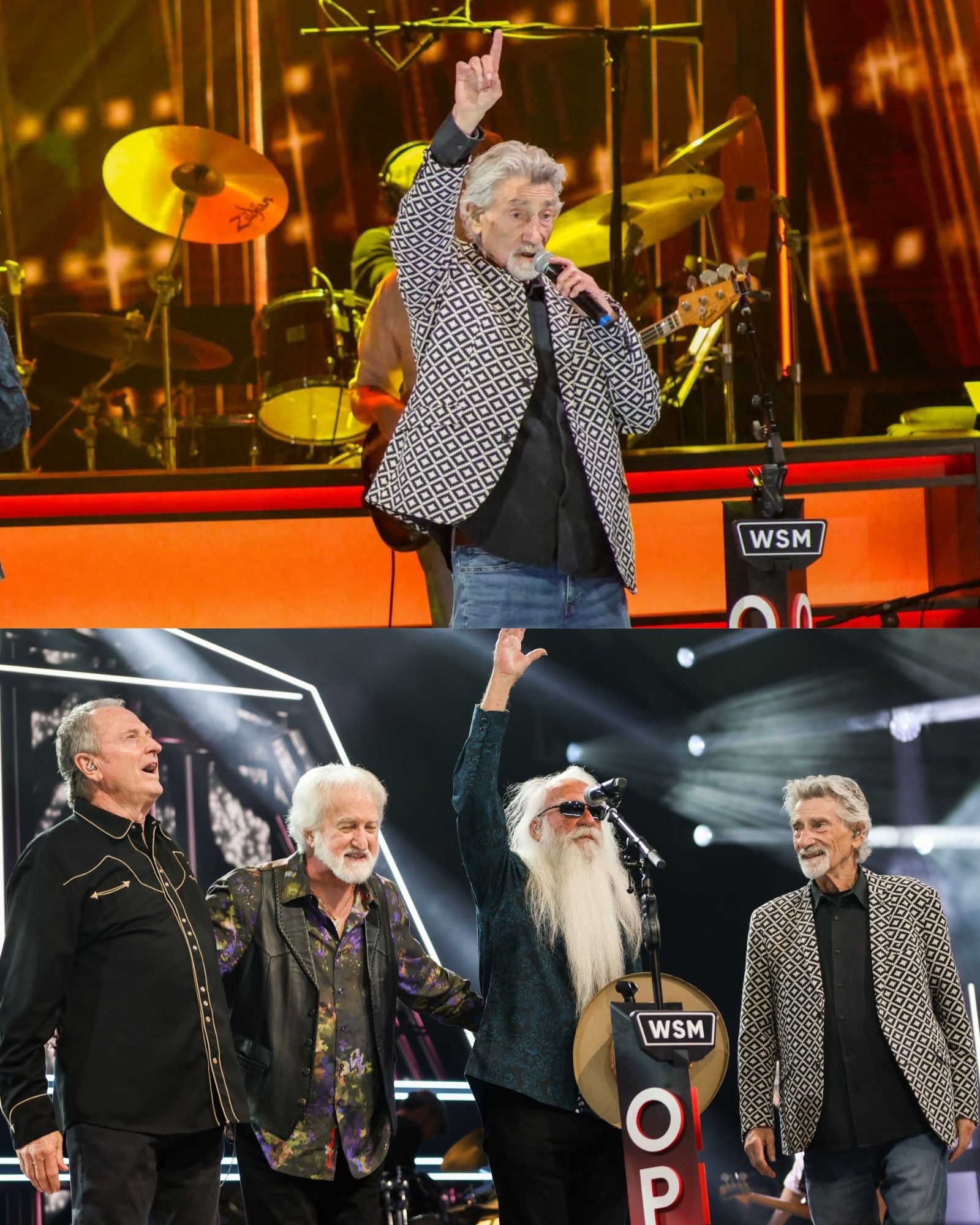
Richard Sterban died on Saturday, November 14, 2026, in Hendersonville, Tennessee. He was 83. For more than half a century he was the bass voice of the Oak Ridge Boys, and the deep “oom papa mow mow” in “Elvira” was his.
Many fans will remember him for a night that came less than ten months before his death. It happened on the stage of the Grand Ole Opry, in the middle of the song that made him famous, and it started with another bass singer who had grown up wanting to be just like him.
A Year Off the Road
In March 2025, Richard Sterban was diagnosed with pancreatic cancer. By mid-May he had stepped away from touring. His last appearance with the group that spring was at the Academy of Country Music Awards. In September he told fans about his diagnosis, thanked them for their prayers, and said he hoped to come back.
The Oak Ridge Boys kept going while he was away. Aaron McCune and Tim Duncan took turns singing the bass parts on the road. Every night, one of them had to sing the most famous bass line in country music, the one audiences had linked to Richard Sterban since 1981.
Midway Through “Elvira”
On January 30 and 31, 2026, the Oak Ridge Boys played the Grand Ole Opry. They started “Elvira,” the song nearly everyone in the building knew by heart. Partway through, Aaron McCune turned to the crowd and spoke.
“When I was a little boy, my heroes were the Oak Ridge Boys. I never dreamed I’d be here with them.”
Then he told the crowd exactly who he had looked up to.
“Their bass singer was the coolest person in the world to me. He’s had a rough year, but I got a surprise. My hero… Richard Sterban.”
Richard Sterban walked out from backstage and sang his signature part himself. The audience gave him standing ovations. Aaron McCune had spent months standing in for his childhood hero, and on this night he gave the line back to the man who had made it famous.
Duane Allen had sung beside Richard Sterban for more than fifty years. Afterward he called the moment “a soul-stirring experience” and said that having Richard on stage with them again was one of God’s greatest blessings. Thousands of fans posted comments saying they felt the same way.
The Choice He Made in 1972
Long before “Elvira,” Richard Sterban had already sung in the biggest arenas in America. He was a member of J.D. Sumner and the Stamps Quartet, the group that sang backup for Elvis Presley at the height of his fame. He even appeared in the film Elvis on Tour.
In 1972, the Oak Ridge Boys offered him their bass job. Richard Sterban had to decide whether to stay on the biggest stage in music or chase his own dream with a gospel quartet that had not yet broken through. He chose the Oak Ridge Boys. Joe Bonsall joined a year later, which completed the classic lineup with Duane Allen and William Lee Golden.
The choice paid off. Within a few years, Richard Sterban was back in the same packed arenas he had played with Elvis Presley, this time with the Oak Ridge Boys. He later told the story in his book, From Elvis to Elvira.
The Bumps on Elvira Street
Dallas Frazier wrote “Elvira” and recorded it in 1966. The Oak Ridge Boys released their version in 1981, and it became one of the biggest hits of their career. It topped the country chart, crossed over to pop radio, and went platinum.
Richard Sterban liked telling a story he had heard from Dallas Frazier himself. Frazier named the song after Elvira Street in Nashville, and that street had a lot of potholes. According to Frazier, the “oom papa mow mow” was meant to sound like the bumps in the road. More than forty years later, the line was still the moment crowds waited for.
“Face to Face With Jesus”
Richard Sterban had faced a long, hard battle with cancer. In the end he died from complications of bronchitis and pneumonia. His family and the Oak Ridge Boys announced his passing together. In their statement, they said they find comfort knowing he is now “face to face with Jesus.”
He is survived by his wife, Donna, and their five children, along with grandchildren and great-grandchildren. The Oak Ridge Boys were inducted into the Country Music Hall of Fame in 2015.
Fans who saw the Opry shows got to hear the line sung by the man it belonged to one more time, and it was a fan who brought him out to sing it.