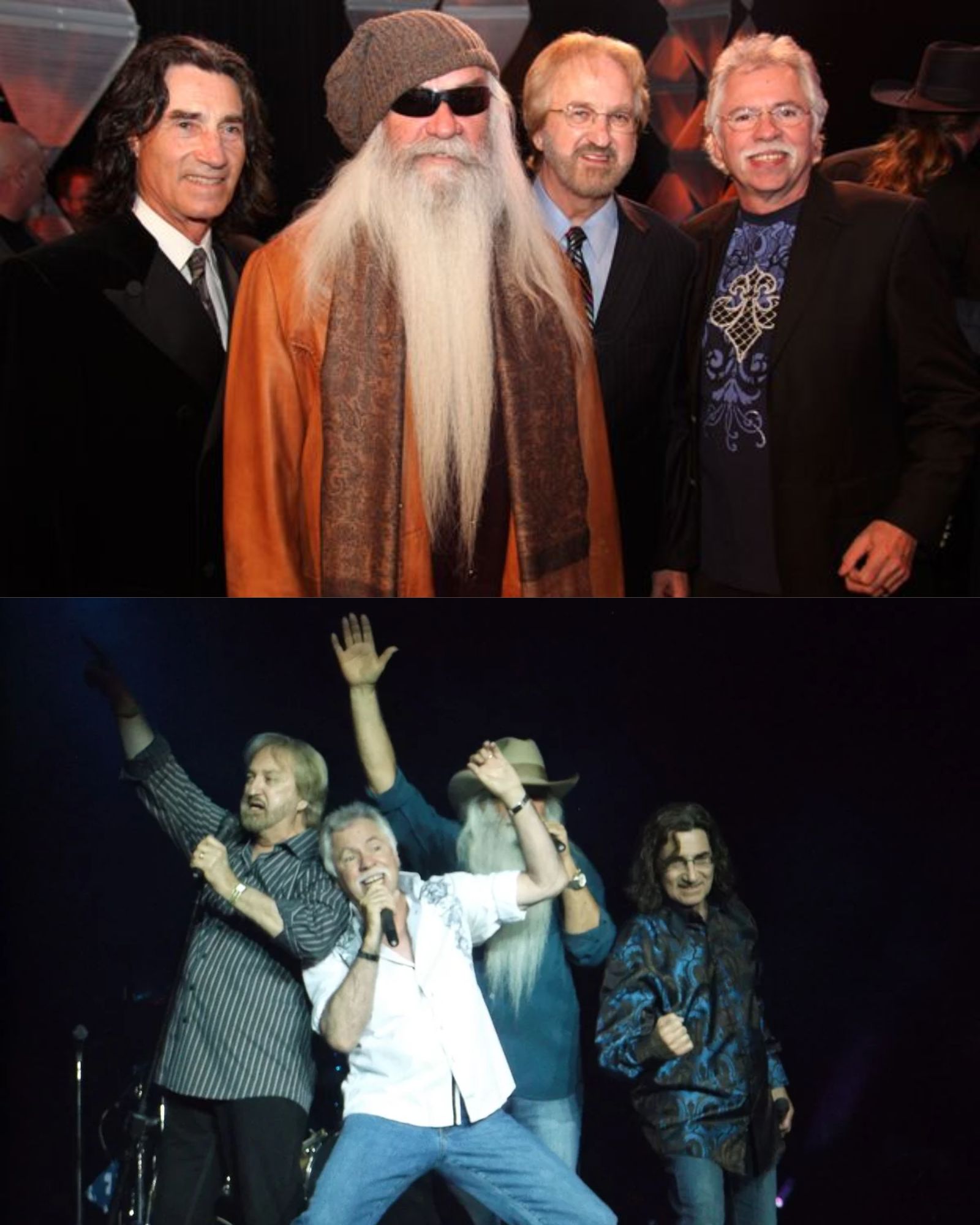
The answer is “Elvira”, the 1981 smash by The Oak Ridge Boys. Fans can sing along before the first chorus is over. Fewer people know that the song never started with a woman at all. It started with a street sign in East Nashville, a car that nearly ran a red light, and a songwriter named Dallas Frazier who looked up at exactly the right moment.
A Near Miss on Gallatin Road
In the mid-1960s, Dallas Frazier was already a working songwriter in Nashville. He had moved there after years in California, where he had grown up and where his song “Alley Oop” had once topped the pop charts for The Hollywood Argyles. One afternoon he was riding in the passenger seat while his friend Ray Baker drove through East Nashville. Ray Baker was a music publisher who had launched his own company on borrowed money.
Ray Baker later recalled that he nearly ran a red light where Gallatin Road meets a small side street. He stopped just in time. As the two friends sat at the light sharing a beer, Dallas Frazier noticed the green sign on the corner. It read Elvira Street.
According to Ray Baker, Dallas Frazier started singing almost immediately. The name rolled off his tongue, and a chorus took shape around it. There was no real Elvira behind the song, just a street name that sounded like music.
The Bumps in the Road
The song’s strangest and most famous ingredient is the deep, bouncing line that sounds like pure nonsense. Richard Sterban, the bass singer of The Oak Ridge Boys, later shared a story he heard from Dallas Frazier himself. Elvira Street, Dallas Frazier told him, was full of potholes and bumps, and that rumbling “oom papa mow mow” line was his way of imitating them.
Dallas Frazier recorded “Elvira” himself for Capitol Records. It became a regional favorite in a few cities, but it only reached No. 72 on the Billboard Hot 100. Kenny Rogers and the First Edition recorded it later, and so did Rodney Crowell in 1978. None of those versions turned it into a major hit.
A Song That Never Left Duane Allen’s Head
One person who never forgot it was Duane Allen of The Oak Ridge Boys. He had heard Dallas Frazier perform “Elvira” on WSM radio back in 1966.
“I heard it once and never forgot it.” – Duane Allen
Years later, producer Ron Chancey, whom the group sometimes called the “Fifth Oak Ridge Boy,” played Dallas Frazier’s version for the band in his office. They were hooked. Within days they were in the studio.
From Elvis Presley to “Elvira”
Ron Chancey had two ideas that changed everything. He wanted Joe Bonsall to sing the lead, and he wanted Richard Sterban to take that low, bumpy line. Richard Sterban had once sung bass behind Elvis Presley as a member of J.D. Sumner and the Stamps before joining The Oak Ridge Boys in 1972. His voice was made for it.
“I did it my way, kind of, and I guess it turned out OK.” – Richard Sterban
In the studio, Richard Sterban noticed guitarist Jimmy Capps grinning while he played and other musicians laughing. That told him the song was something different. As he later put it, “It just felt special.”
The Night in Spokane
Before “Elvira” was even released as a single, The Oak Ridge Boys tried it on a live crowd at the Spokane Opera House in early 1981. Joe Bonsall remembered the audience jumping to its feet and screaming. The group ended up performing it twice in the set and again as an encore. The next night in Portland, Oregon, the reaction was the same. From the road, the group called Ron Chancey and the record label and pushed for “Elvira” to be the single.
A Hit Fifteen Years in the Making
The Oak Ridge Boys released “Elvira” from their 1981 album Fancy Free. It went to No. 1 on the Billboard country chart and climbed to No. 5 on the Billboard Hot 100, the biggest pop hit of their career. It also won the Grammy for Best Country Performance by a Duo or Group with Vocal.
Joe Bonsall once laughed that the famous line means absolutely nothing. Maybe that is the magic. A street sign, a near miss at a red light, and a few potholes became one of the most joyful songs in country music. Decades later, crowds still wait for Richard Sterban to lean into the microphone and deliver it.