One of Dolly Parton’s most beloved songs began on an unlikely piece of paper: a dry-cleaning tag torn from one of Porter Wagoner’s outfits.
There was no special songwriting session, no carefully prepared notebook, and no grand plan to write a country classic. Dolly Parton was traveling on a tour bus when the words finally began coming together.
But the story behind those words had started many years earlier, in a poor family home in the mountains of East Tennessee.
And for Dolly Parton, it was a childhood memory that had never quite stopped hurting.
A Coat Made From Scraps of Fabric
Growing up in rural Tennessee, Dolly Parton knew what it meant to have very little money. With twelve children in the family, new clothing was not something the Parton household could easily afford.
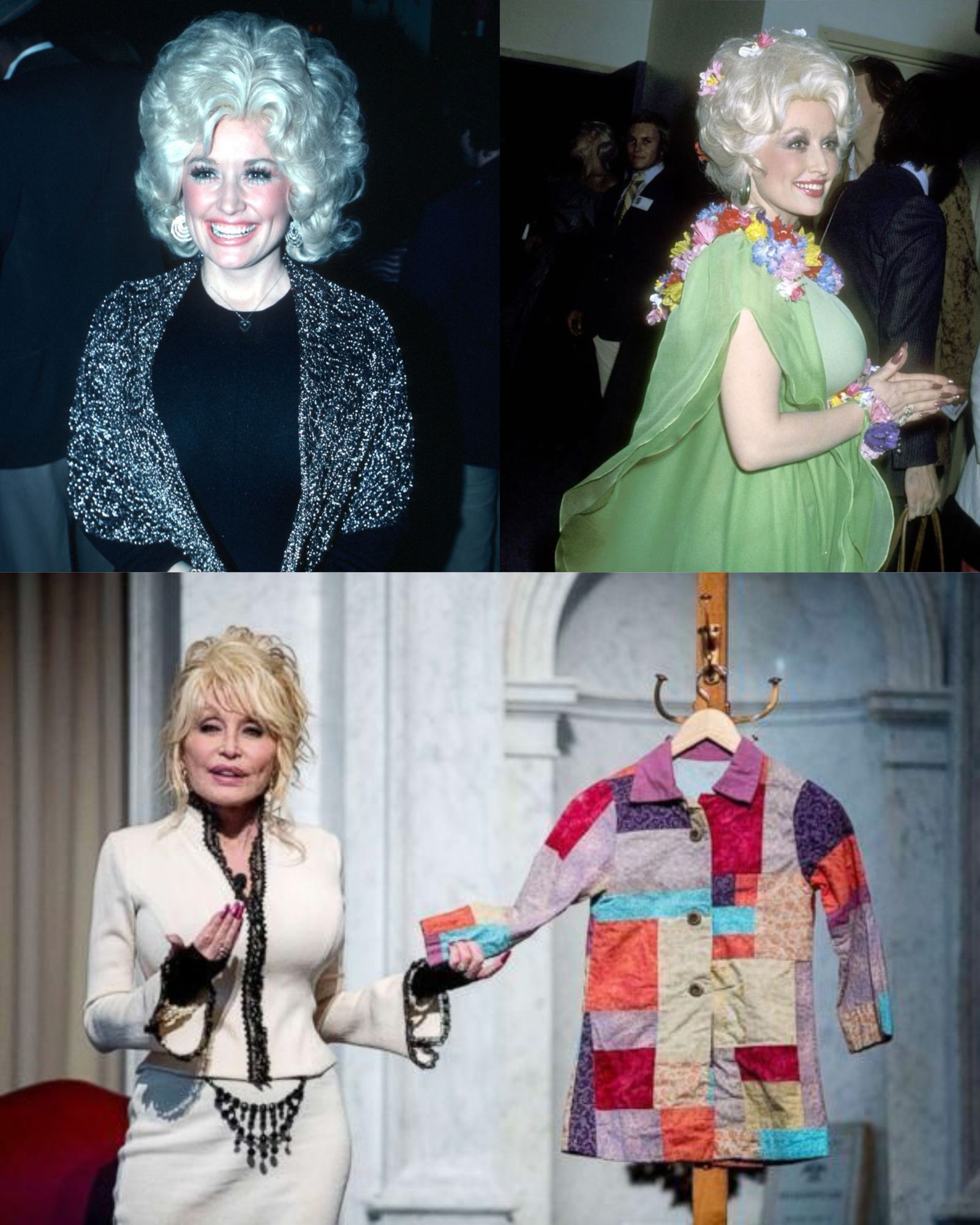
One day, Dolly Parton’s mother, Avie Lee Parton, took pieces of fabric that had been given to the family and began sewing a coat.
The material came in different colors and patterns. Rather than seeing the scraps as worthless, Avie Lee Parton carefully stitched them together into something useful and beautiful.
While sewing, Avie Lee Parton told young Dolly the biblical story of Joseph and his coat of many colors.
To a little girl, that story made the homemade coat feel extraordinary.
Dolly Parton was proud of the finished garment. The coat was not something to hide or feel ashamed of. The coat was something special, made by a mother who had put love into every stitch.
But when Dolly Parton wore the coat to school, the reaction was painfully different.
The Day the Other Children Laughed
Instead of admiring the colorful coat, classmates made fun of Dolly Parton for wearing clothing made from discarded fabric.
In a 2023 NPR interview, Dolly Parton remembered how deeply that experience hurt. The teasing brought Dolly Parton to tears, and the disappointment was so overwhelming that young Dolly even felt, for a moment, that her mother had misled her about how beautiful the coat was.
It was a particularly painful misunderstanding. Avie Lee Parton had tried to make poverty feel less important by giving an ordinary coat a wonderful story. At school, other children made Dolly Parton feel ashamed of the very thing that had brought so much happiness at home.
That contrast would eventually become the heart of “Coat of Many Colors.”
But the song did not arrive immediately.
The Words Finally Came on a Tour Bus
Years later, Dolly Parton was building a career in country music and performing with Porter Wagoner.
The childhood memory continued returning. Sometimes a line of a song would form. At other times, a melody would come to mind. The experience remained personal, even as Dolly Parton’s career moved forward.
Then, during a journey on the tour bus, the separate pieces suddenly began fitting together.
Dolly Parton needed something to write on but could not find any paper.
Looking around, Dolly Parton noticed a dry-cleaning tag attached to one of Porter Wagoner’s outfits. Dolly Parton tore off the tag and began writing down the lyrics.
In a February 2016 interview with the Library of Congress, Dolly Parton confirmed the unusual story and explained that the original piece of paper had been preserved at the museum in Dollywood.
A song remembered by generations of country fans had started on something most people would have thrown away.
A No. 4 Country Hit With a Much Bigger Legacy
Released in 1971, “Coat of Many Colors” reached No. 4 on Billboard’s country chart. The recording was made at Nashville’s historic RCA Studio B and became one of Dolly Parton’s signature performances.
In 2011, the Library of Congress selected the recording for the National Recording Registry, recognizing its lasting cultural and historical importance.
Yet Dolly Parton later explained that the greatest reward was not simply the chart position or public recognition.
Writing the song had helped Dolly Parton finally release a hurt carried since childhood.
The experience had been transformed into a story about family, dignity, poverty, and the difference between what something costs and what something means.
Why the Song Still Matters
In the same Library of Congress interview, Dolly Parton shared another remarkable detail: teachers had told Dolly Parton they were using “Coat of Many Colors” to help children understand bullying and self-worth.
A painful experience from one little girl’s childhood had become a way for other children to talk about being judged or laughed at.
For longtime fans, the song also brings back memories of homemade clothes, parents making sacrifices, and families finding ways to get by with very little.
There is no complicated lesson hidden in the story. A mother made a coat from what was available. A little girl loved it. Other children laughed. Years later, Dolly Parton found a way to tell the world why that coat mattered.
And somewhere in the story is that small dry-cleaning tag from Porter Wagoner’s clothing — an ordinary reminder of the day Dolly Parton turned a painful childhood memory into one of country music’s most enduring songs.