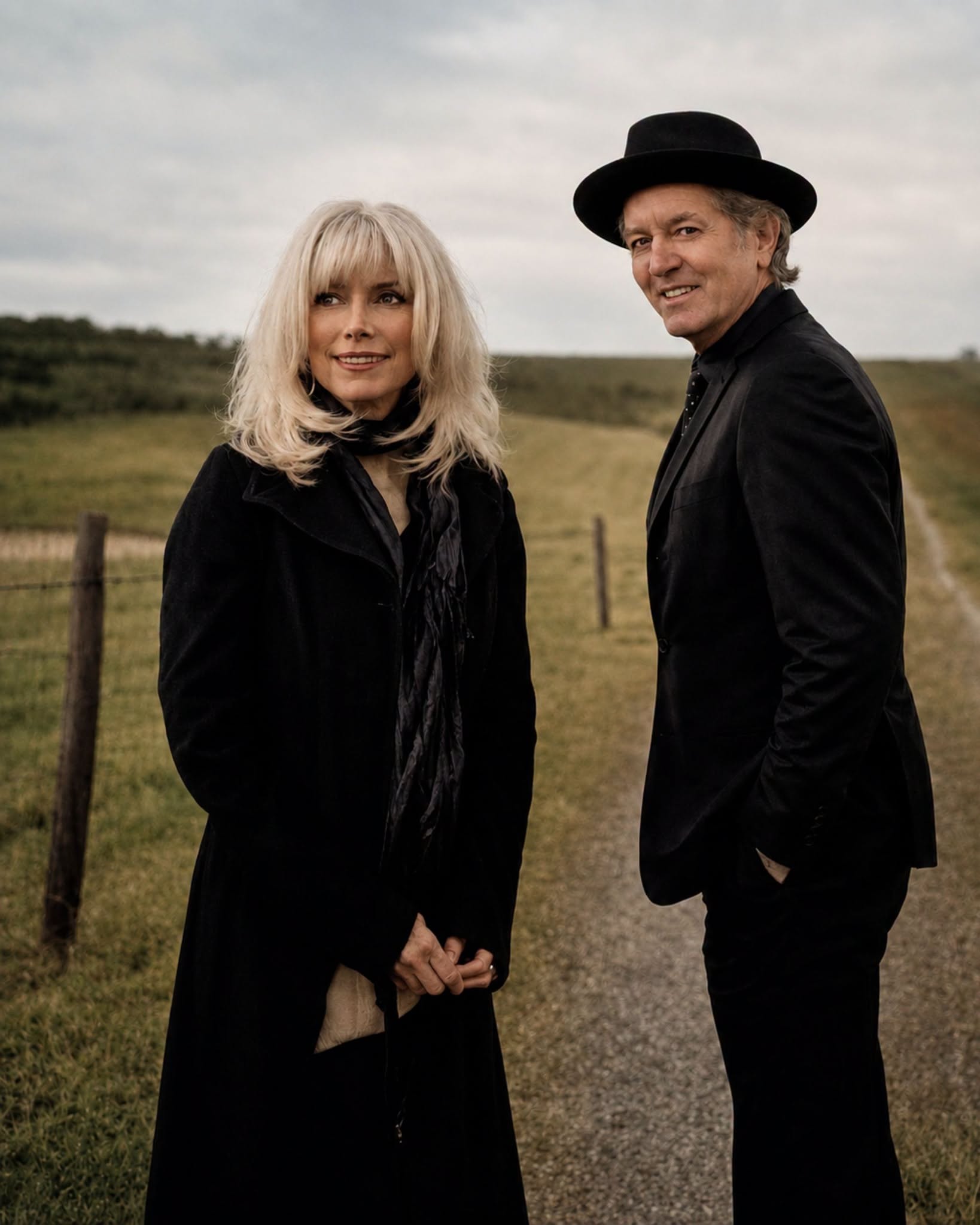
Emmylou Harris, Rodney Crowell, and the Song That Changed Everything
After Gram Parsons died, Emmylou Harris was still searching for songs that could carry her forward. She had the voice, the instincts, and the ache that great country music often needs, but she wanted material that felt alive in her hands. Somewhere in that search, a five-song cassette reached her from Texas, sent by a writer she did not yet know well: Rodney Crowell.
Crowell had come to Nashville with songs, determination, and very little reputation. He was another hungry young songwriter trying to be heard in a city full of them. Then Emmylou Harris played “Bluebird Wine.” The song had something immediate in it: a plainspoken sadness, a steady melody, and the kind of honesty that makes a listener stop what they are doing.
She recorded “Bluebird Wine” as the opening track on Pieces of the Sky in 1975, and that decision changed both careers. Emmylou Harris did not just cut the song and move on. She wanted to meet the man who had written it. Before long, Rodney Crowell was inside her Hot Band, singing harmony and playing alongside musicians such as James Burton and Glen D. Hardin. What began as admiration became musical trust.
A Songwriter Worth Listening To
Once Emmylou Harris started recording Rodney Crowell songs, other artists began paying attention too. That pattern repeated again and again. Waylon Jennings recorded “I Ain’t Living Long Like This.” The Oak Ridge Boys took “Leaving Louisiana in the Broad Daylight” to No. 1. Crystal Gayle reached the top with “‘Til I Gain Control Again.” Bob Seger turned “Shame on the Moon” into a major pop hit.
For a long stretch, it seemed that Rodney Crowell songs traveled farther than Rodney Crowell himself. His writing had reach, but his own name was still building. That changed in a dramatic way with Diamonds & Dirt, which produced five consecutive No. 1 country singles and confirmed that Rodney Crowell was not only a songwriter for other voices, but a force in his own right.
From Introduced to Equal
Decades after that first cassette, Emmylou Harris and Rodney Crowell returned to each other in a new way. They made Old Yellow Moon together, an album that felt less like a reunion than a recognition. By then, the unknown songwriter Emmylou Harris had once brought into her band was no longer the new arrival. He was a peer, standing beside her as an equal partner.
Sometimes a single song does more than open a door. Sometimes it starts a friendship, a band, a career, and a second life for both the singer and the writer.
In 2014, Old Yellow Moon won the Grammy for Best Americana Album, a fitting honor for a partnership that had grown over time instead of burning out quickly. It also felt like a full-circle moment. The woman who once heard promise in a cassette had helped reveal one of country music’s most durable songwriters, and the songwriter who arrived with almost no reputation had become someone impossible to ignore.
That is the quiet power of great music. One recording leads to another. One act of trust leads to a career. And one song, heard at the right moment, can change the direction of two lives at once.