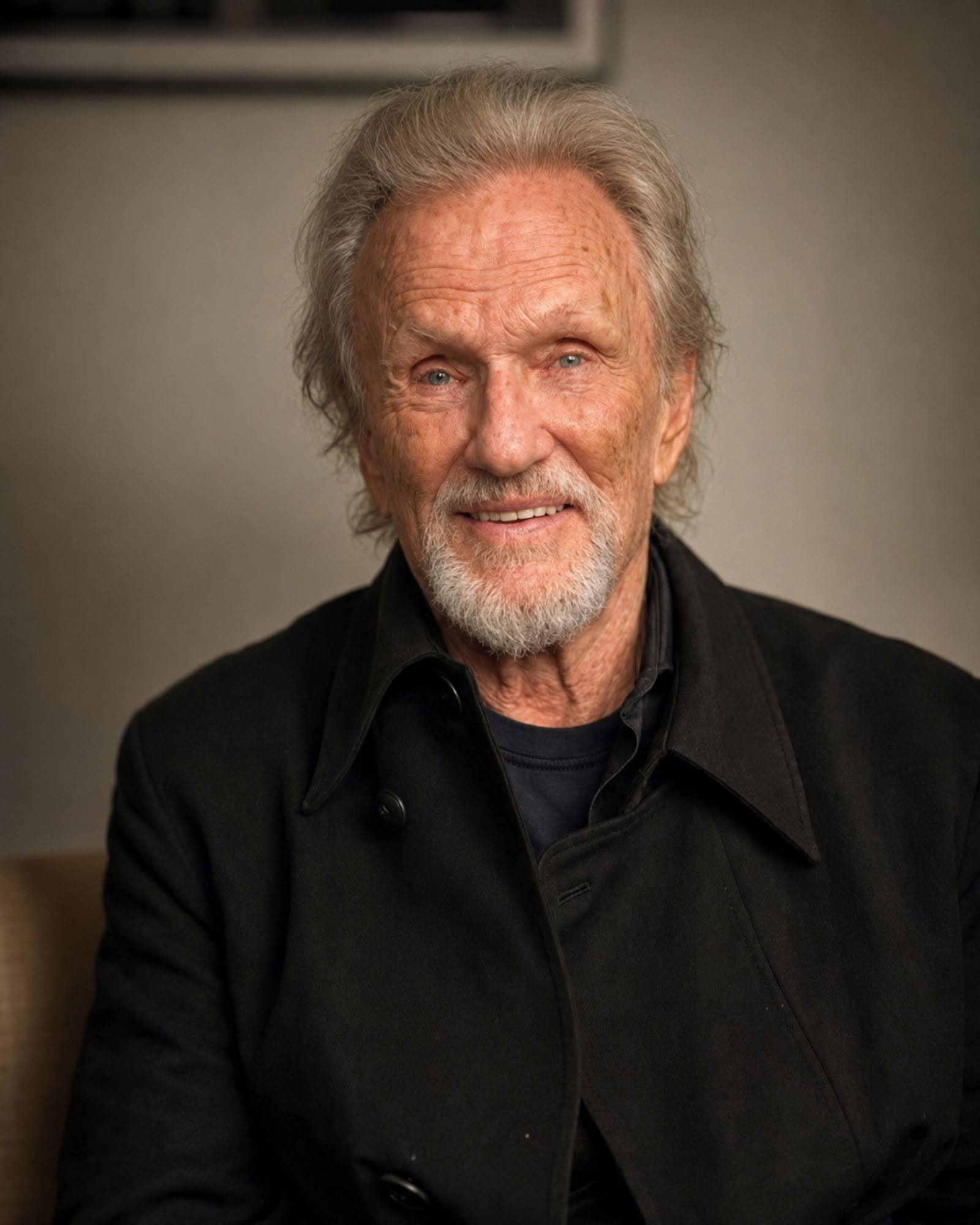
He Turned Down West Point to Sweep Floors in Nashville. People Thought Kris Kristofferson Was Throwing His Life Away.
Kris Kristofferson’s life did not follow a careful, obedient path. It seemed to move in the opposite direction. He was a Rhodes Scholar at Oxford, an Army captain, a helicopter pilot, and a man with a teaching assignment waiting for him at West Point. By ordinary standards, he had already earned a future that looked secure and impressive.
Then he walked away from it.
Instead of choosing certainty, Kris Kristofferson chose Nashville. He took a job sweeping floors and making himself useful at Columbia’s recording studio, where he could listen, learn, and wait. To many people around him, the choice made no sense. Why would a man with that kind of record trade prestige for uncertainty?
The answer came slowly, and then all at once.
While Kris Kristofferson was paying dues in Nashville, he was also writing the songs that would change his life. “Sunday Mornin’ Comin’ Down” became a breakthrough when Johnny Cash recorded it and later won the Country Music Association’s Song of the Year. “Help Me Make It Through the Night” became one of his signature songs and brought him a Grammy. “Me and Bobby McGee” became a classic, later reaching No. 1 in Janis Joplin’s posthumous version.
What looked like a detour was really a gamble on his own voice.
That gamble carried Kris Kristofferson beyond music. He moved into film and earned a Golden Globe for A Star Is Born. Later, he stood alongside Johnny Cash, Willie Nelson, and Waylon Jennings in The Highwaymen, a supergroup that felt less like a marketing idea and more like a gathering of giants who understood each other.
Still, the story did not stay triumphant forever. In late life, Kris Kristofferson struggled with serious memory problems. His family later said doctors linked much of the difficulty to Lyme disease, and treatment helped significantly. He eventually stepped back from performing and returned to the quieter life he preferred in Hawaii.
“I have tried in my way to be free.”
That line feels like a summary of the whole journey. Kris Kristofferson did not chase the life other people expected. He chose the harder road, the uncertain road, the one that let him become himself. When he died at his Maui home on September 28, 2024, at 88, he left behind a career built not on obedience, but on courage, risk, and a stubborn faith in his own path.
For Kris Kristofferson, the world once thought sweeping floors was a step down. In the end, it was the beginning of everything.