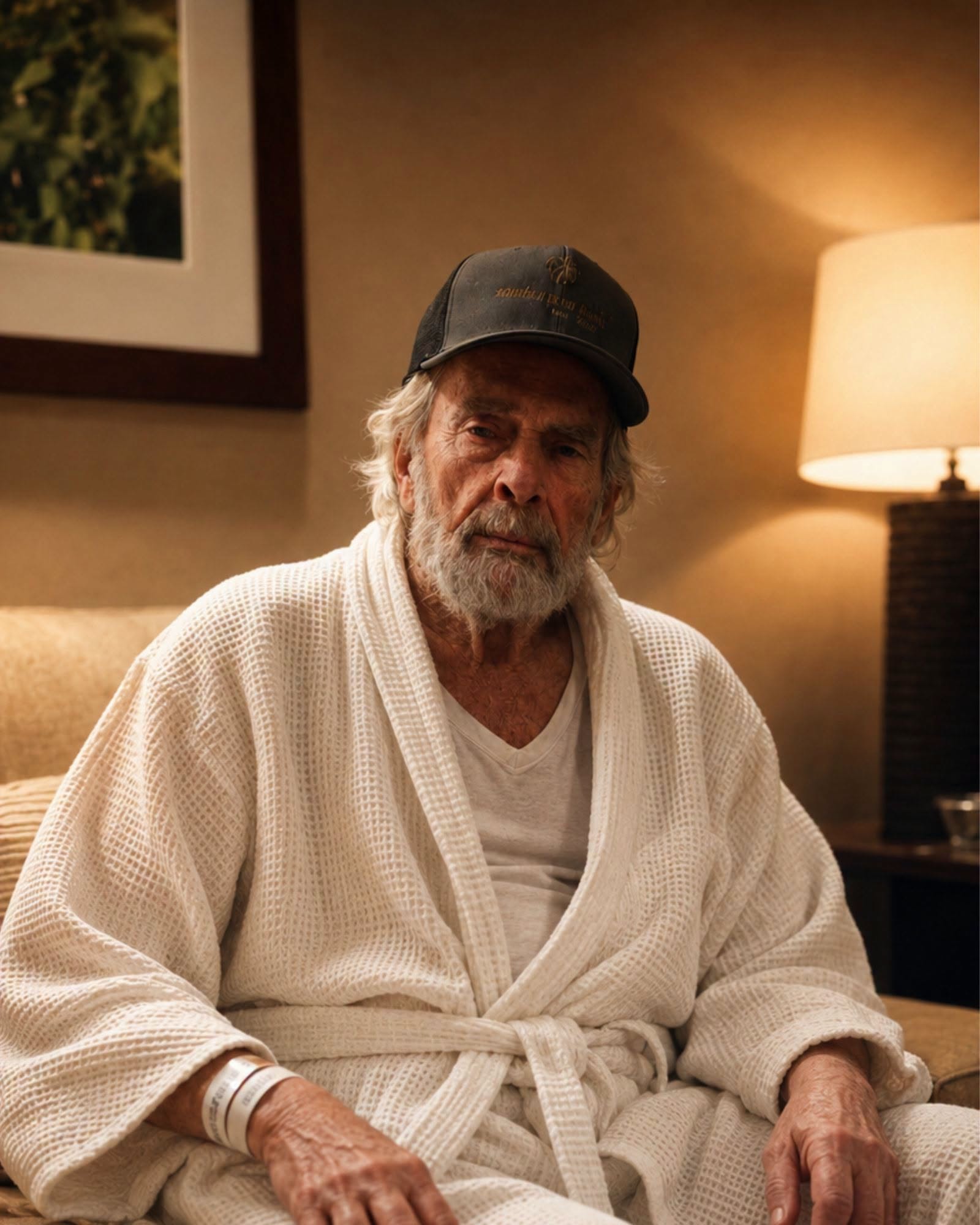
Merle Haggard’s Final Goodbye Was Planned Like a Song
Merle Haggard was born into hard luck and made a career out of turning it into music. He came into the world in 1937 in a converted boxcar on the outskirts of Bakersfield, California, and he carried that working-class, fence-line honesty into nearly every song he wrote. Long before the awards, the hall of fame honors, and the legend, Merle Haggard had already lived the kind of life he would later sing about: prison, drift, regret, stubbornness, and survival.
By the time Merle Haggard was sent to San Quentin in the late 1950s, he had already built a reputation as a young man who kept finding the edge of trouble. That experience changed him. It also changed country music. Instead of polishing away the rough parts, Merle Haggard put them right in the center. He sang for men country radio often preferred not to see: convicts, drifters, gamblers, and workers trying to get through the month.
The Man Who Planned His Own Farewell
When Merle Haggard died on April 6, 2016, at his home in Palo Cedro, California, he was 79 years old. The timing carried a strange, quiet poetry: it was his birthday, and the day he had reportedly told his sons would be the day. A private funeral followed on April 9 at his ranch, where the ceremony was arranged with the same care Merle Haggard had once brought to a record session.
Fifteen rows of folding chairs sat in the grass. His tour bus, the Super Chief, was parked sideways to help block the wind. Family, close friends, and a handful of musicians gathered under the open sky. Merle Haggard had chosen the music himself, and the service reflected his taste from beginning to end. It opened with Lefty Frizzell’s recording of I Love You a Thousand Ways. Connie Smith sang Precious Memories. Later, Connie Smith and Marty Stuart sang Silver Wings. Marty Stuart also officiated the service, just as Merle Haggard had requested.
The ceremony felt less like a farewell built around grief and more like one built around memory.
What remained of the Strangers, Merle Haggard’s longtime band, sat among the mourners. Kris Kristofferson rose to sing, and when the wind pulled at the music stand during Sing Me Back Home, he smiled and kept going. It was the kind of moment Merle Haggard would have understood immediately: imperfect, unguarded, and true.
A Life That Stayed Honest
Merle Haggard spent his career writing about people who were not trying to impress anyone. That honesty is why his songs endured. He did not invent the ache in working life or the loneliness of bad decisions. He simply gave those feelings a melody. From Bakersfield to San Quentin to the Country Music Hall of Fame, Merle Haggard kept the same direct voice.
Even after his death, that story stayed close to home. In Bakersfield, a post office was later named in his honor in April 2018, on what would have been his 81st birthday. It was a fitting tribute for a man who never really left the place that shaped him. Merle Haggard started as a boy in a boxcar, became a prisoner, then became one of country music’s defining voices. In the end, his farewell was as carefully chosen as any verse he ever sang.