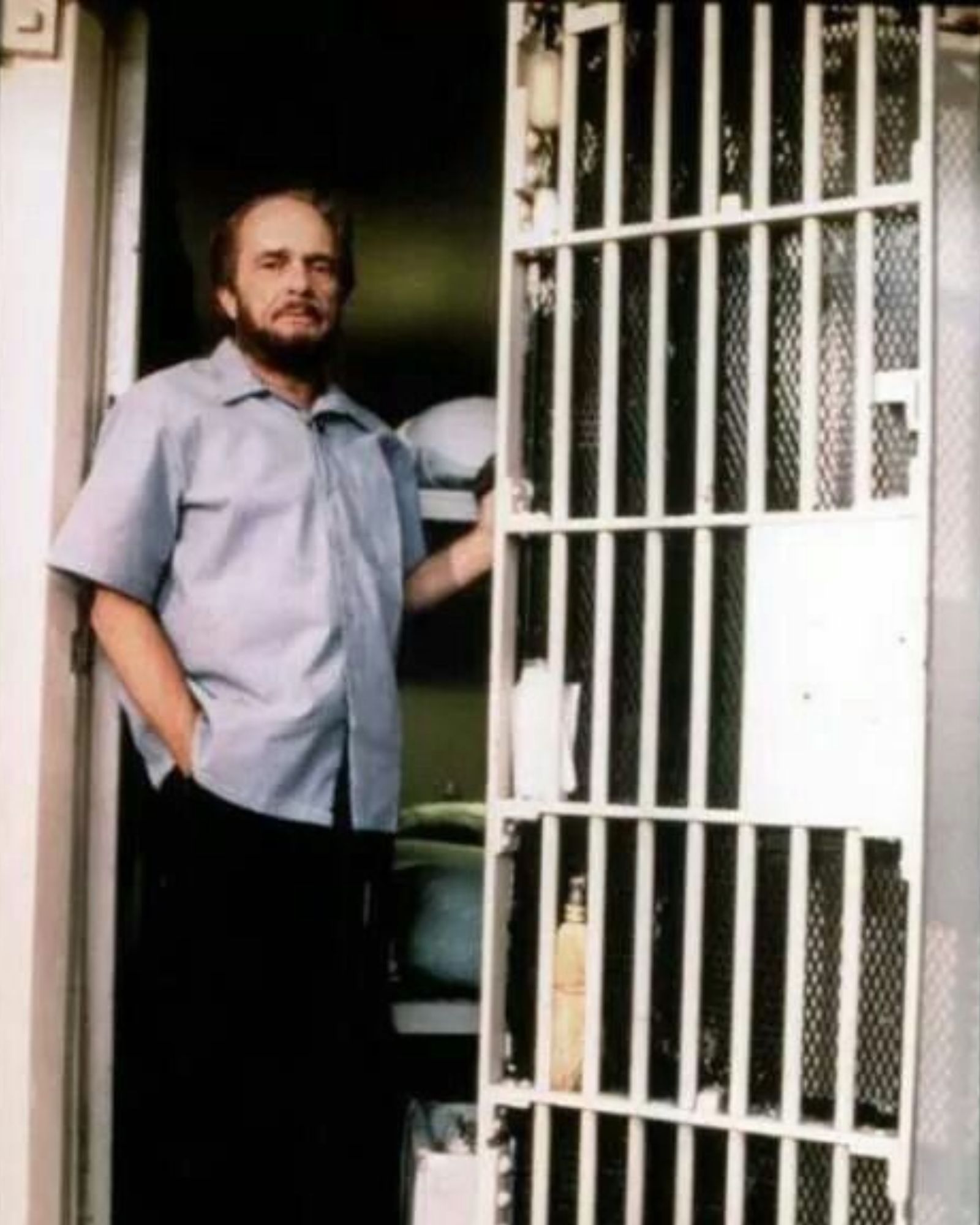
“I’m living proof that things go wrong in America and I’m also living proof that things can go right.” — Merle Haggard
Merle Haggard said those words in the 2010 PBS documentary Merle Haggard: Learning to Live with Myself. By then, Merle Haggard had become one of the most respected figures in country music. But the meaning behind that statement reached back to a time when his future looked very different.
Before the awards, sold-out concerts, and unforgettable songs, Merle Haggard had been a runaway, a repeat offender, and a prisoner at California’s San Quentin.
What makes his story remarkable isn’t simply that Merle Haggard became famous. It’s what Merle Haggard did when he finally decided to stop living the way he had been living.
A Young Man Who Couldn’t Stay Out of Trouble
Born April 6, 1937, near Bakersfield, California, Merle Haggard grew up in a converted railroad boxcar. His parents, James and Flossie Haggard, had come west from Oklahoma looking for a better life.
When Merle Haggard was nine, his father died. His mother worked to support the family, but young Merle increasingly rebelled against authority.
Merle Haggard skipped school, ran away from home, escaped reform schools, and committed petty crimes. By 1957, a failed burglary at a Bakersfield roadhouse had led to another arrest. After attempting to escape from county jail, Merle Haggard was sent to San Quentin.
Even prison didn’t immediately change him.
Merle Haggard continued getting into trouble and eventually spent time in solitary confinement after being caught drinking prison-made alcohol.
But that experience became one of the turning points of his life.
The Decision Merle Haggard Made Behind Prison Walls
Years later, Merle Haggard described that experience during an interview with Terry Gross on NPR’s Fresh Air.
After leaving isolation, Merle Haggard requested one of the hardest jobs available in the prison: working in the textile mill.
Instead of looking for another escape, Merle Haggard began trying to build a record of responsible behavior.
It was a meaningful change for someone who had spent much of his youth resisting rules and authority.
Music also helped. While incarcerated, Merle Haggard watched Johnny Cash perform at San Quentin. Seeing a professional country singer bring music to prisoners gave Merle Haggard another reason to believe there might be a future beyond those walls.
In 1960, Merle Haggard was released on parole.
There was no guaranteed success waiting outside. Merle Haggard worked for his brother Lowell, digging ditches and wiring houses. At night, music offered another possibility.
He began performing in Bakersfield clubs, eventually connecting with musicians and producers who helped launch his recording career.
The Day Johnny Cash Helped Merle Haggard Face His Past
By August 1969, Merle Haggard had become a successful country singer. But his prison history still carried a stigma.
When Merle Haggard appeared on The Johnny Cash Show, Johnny Cash encouraged him to talk openly about his incarceration.
Merle Haggard told the television audience that the first time he had seen Johnny Cash perform was at San Quentin. Back then, Merle Haggard had been among the prisoners watching the show.
The admission was significant. Although his past was already known, Merle Haggard was acknowledging it before a national television audience.
Some viewers complained to ABC about featuring a former prisoner. But Merle Haggard continued his career without hiding the experiences that had shaped his music.
His songs about regret, confinement, working people, and second chances carried a weight that listeners recognized.
Returning to the Prison That Once Held Him
On February 20, 1971, Merle Haggard returned to San Quentin for a gospel recording at the prison’s Garden Chapel.
It became part of his album The Land of Many Churches, released later that year.
There was something extraordinary about that return. The former prisoner was now an established recording artist, singing in the same institution where he had once struggled to control his own life.
And an even more meaningful recognition was coming.
In 1972, California Governor Ronald Reagan granted Merle Haggard a full pardon. For Merle Haggard, that recognition meant far more than another award.
By then, he had already won the Country Music Association’s Entertainer of the Year award in 1970. In 1994, Merle Haggard was inducted into the Country Music Hall of Fame.
The Real Meaning of a Second Chance
Merle Haggard never claimed to have lived a perfect life. He remained outspoken, independent, and sometimes difficult. His life continued to have complications.
But the young man who repeatedly escaped reform schools eventually became someone who could return to San Quentin with a guitar instead of a prison number.
That is why Merle Haggard’s words about things going wrong and then going right still carry so much meaning.
Merle Haggard couldn’t undo his mistakes. But through work, music, and years of different choices, Merle Haggard proved that those mistakes didn’t have to write the rest of his story.
When Merle Haggard died on April 6, 2016, his 79th birthday, he left behind more than a remarkable collection of country songs. He left a life story that offered something many people need to believe: a person can take responsibility for yesterday and still build a better tomorrow.