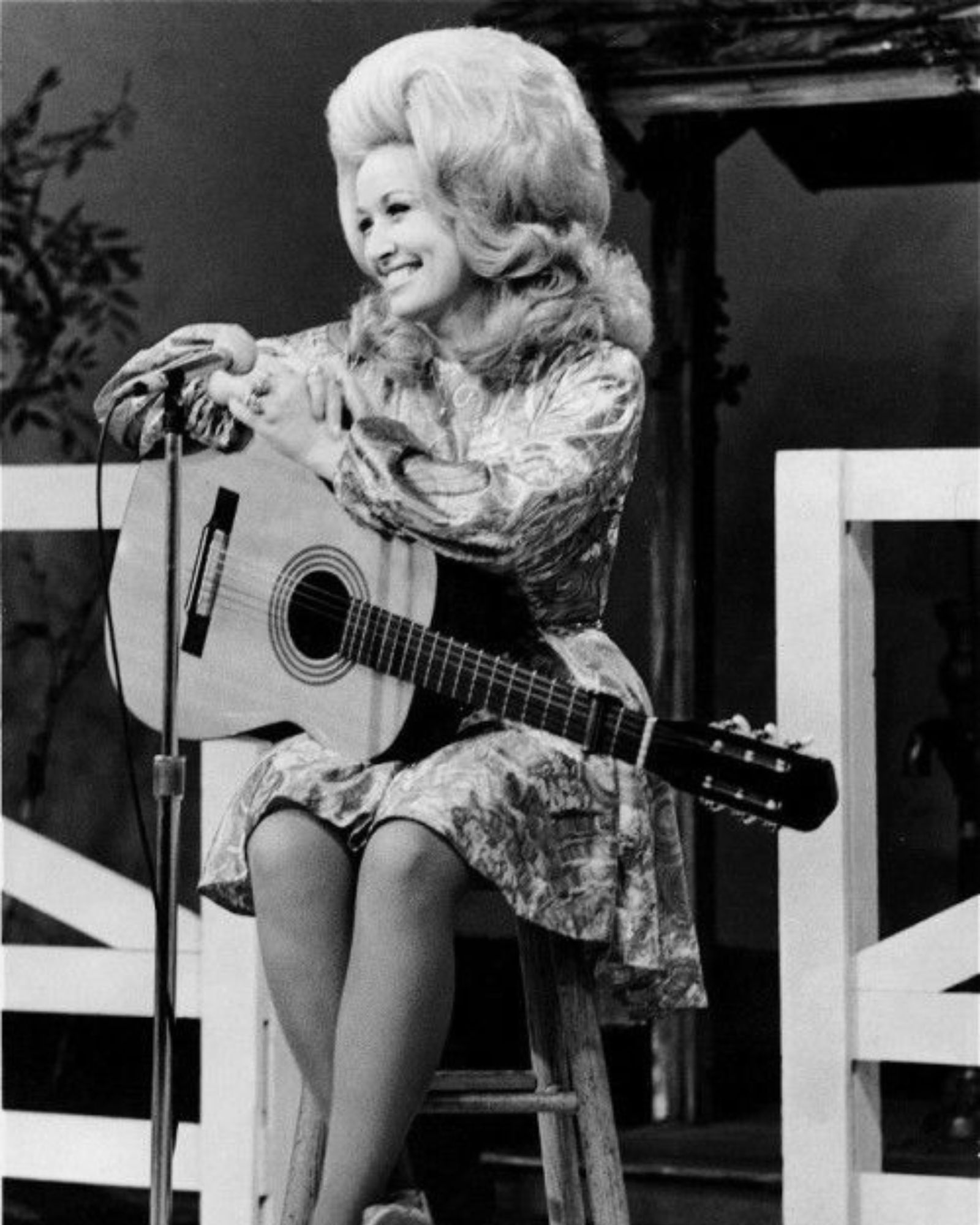
One of the most recognizable guitar parts in country music nearly became a source of confusion during the recording of Dolly Parton’s “Jolene.”
Porter Wagoner was trying to show the studio musicians how to play the unusual guitar lick Dolly Parton had created. There was just one problem: the musicians weren’t getting the sound right.
According to Dolly Parton’s own recollection, the situation became increasingly frustrating. Porter Wagoner wanted to demonstrate the part, but the distinctive rhythm wasn’t coming through as intended.
Finally, Dolly Parton took the guitar from Porter Wagoner and said:
“Let me just show them the lick.”
It was a small exchange during a recording session, but the story reveals something important about Dolly Parton’s musicianship and the changing relationship between two major figures in country music.
The Recording Session Behind a Country Classic
By 1973, Dolly Parton had spent several years working alongside Porter Wagoner. The partnership began in 1967, when Dolly Parton joined The Porter Wagoner Show, gaining national television exposure and establishing a successful recording career.
Porter Wagoner had played an important role in helping Dolly Parton reach a wider audience. But as Dolly Parton’s songwriting and solo career developed, the professional relationship became more complicated.
“Jolene” was recorded at RCA Studio B in Nashville in 1973, with Bob Ferguson producing. The recording brought together experienced Nashville session musicians, but the song contained a musical idea that came directly from Dolly Parton.
That idea was the distinctive guitar lick heard throughout the recording.
Unlike a conventional country accompaniment, the repeating guitar pattern gave “Jolene” an urgent, almost restless quality. The music immediately established tension before the lyrics had fully explained the narrator’s situation.
Getting that pattern right mattered.
Why Dolly Parton Finally Picked Up the Guitar
In a 2019 interview for the podcast Dolly Parton’s America, Dolly Parton recalled how Porter Wagoner attempted to teach the guitar part to the musicians.
According to Dolly Parton, Porter Wagoner wanted to impress the players by demonstrating the lick. But the attempts weren’t producing the intended sound.
Dolly Parton remembered becoming increasingly upset as the musicians struggled to understand the part.
The eventual decision to take the guitar and demonstrate the lick personally was practical. Dolly Parton knew exactly how the music was supposed to sound because Dolly Parton had created it.
The exchange also reflected a broader professional tension. Dolly Parton wanted greater creative independence, while Porter Wagoner remained accustomed to directing their established working partnership.
That tension would become a significant part of their eventual separation, although the recording-session incident was only one moment in a much longer relationship.
The Guitar Part the Musicians Remembered
More than five decades after the original recording, Dolly Parton returned to the subject in a 2024 interview with The Guardian.
Asked about the remarkable rhythm of “Jolene,” Dolly Parton remembered the enthusiasm of the studio musicians when the guitar lick was introduced.
The musicians recognized that the rhythm was unusual compared with much of the material they had been recording. Dolly Parton also recalled playing guitar seriously during that period, before the long fingernails associated with the singer’s later public image.
Those recollections provide another side of the studio story. The guitar lick wasn’t merely a part that had caused temporary confusion. It was a musical idea that the players themselves appreciated once they understood it.
“Jolene” was released as a single in October 1973 and became a No. 1 country hit in 1974.
A Small Moment That Says Something About Dolly Parton
Most listeners remember “Jolene” for its unforgettable melody and the pleading voice of a woman afraid of losing the person she loves.
But the recording also preserves Dolly Parton’s work as a guitarist and musical arranger of the song’s central ideas.
The studio incident is particularly revealing because it came from Dolly Parton’s own account, rather than an embellished legend passed down through the years.
Porter Wagoner was trying to communicate a musical idea. The musicians needed to hear how it worked. Dolly Parton eventually demonstrated the part personally.
And that distinctive guitar rhythm became inseparable from one of country music’s best-known recordings.
For all the attention given to Dolly Parton’s voice and songwriting, the story of “Jolene” offers another reminder: Dolly Parton understood not only the words and melody, but also the precise guitar sound the song needed.