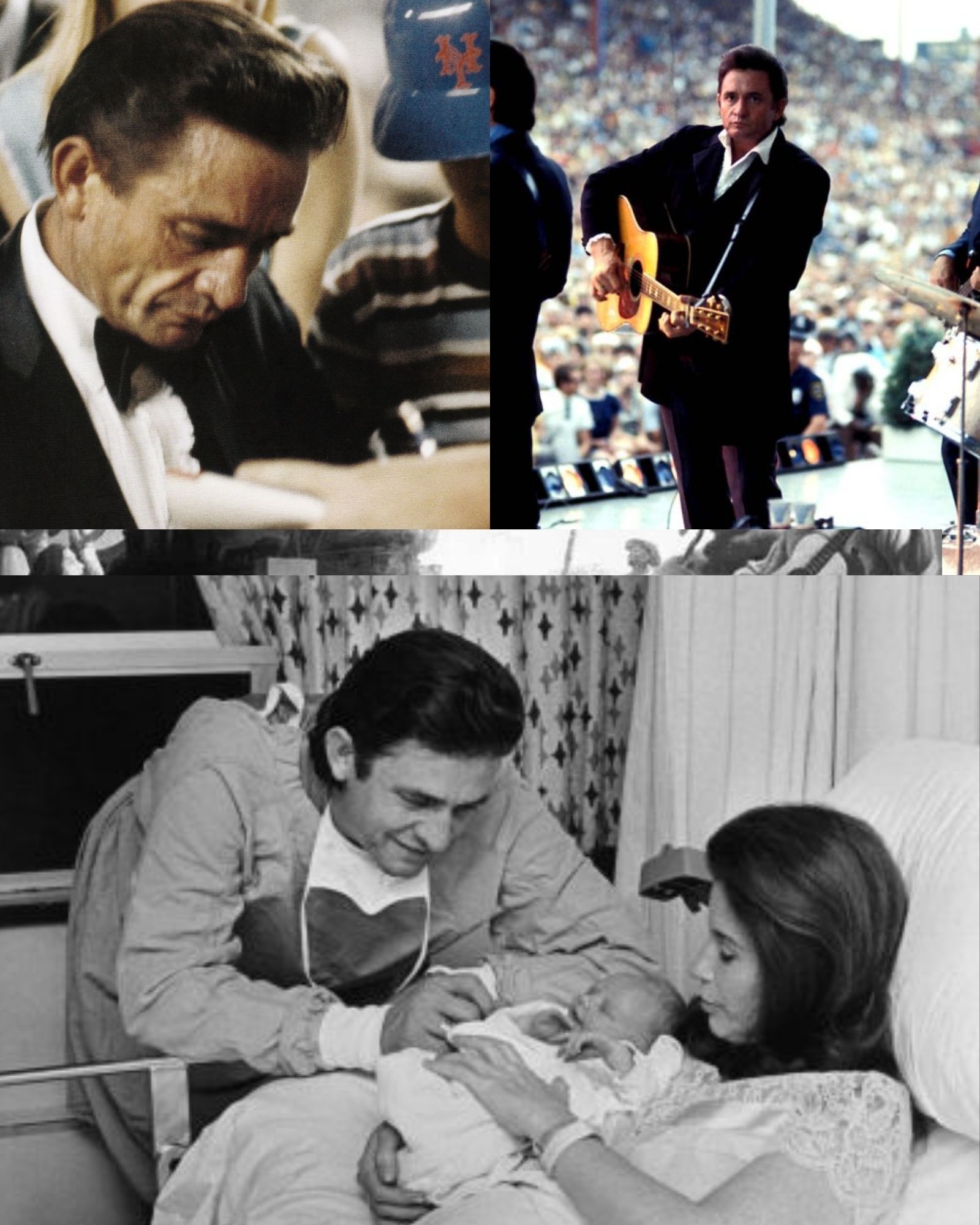
In October 1967, Johnny Cash later said he entered a Tennessee cave expecting to die. Just weeks afterward, Johnny Cash stood before a high school audience in Hendersonville, Tennessee, facing something that frightened him in an entirely different way: performing without the pills he had depended on for years.
Most country music fans know what happened at Folsom Prison in January 1968. Far fewer know about the small performance that came before it, when Johnny Cash began discovering whether he could still be the entertainer audiences loved without relying on drugs.
To understand why that night mattered, the story begins with one of the darkest and most debated episodes of Johnny Cash’s life.
The Story Johnny Cash Told About Nickajack Cave
By the fall of 1967, Johnny Cash had spent years struggling with addiction to amphetamines and barbiturates. The pressures of touring, damaged relationships, and dependence on medication had taken a serious toll. Although Johnny Cash remained a successful recording artist, life away from the stage had become increasingly troubled.
In Cash: The Autobiography, published in 1997, Johnny Cash described entering Nickajack Cave near the Tennessee River in October 1967 with no intention of returning.
Johnny Cash recalled crawling into the darkness until the batteries in his flashlight died. Unable to see a way out, Johnny Cash lay underground and experienced what he later described as a profound spiritual realization.
In Johnny Cash’s telling, the experience changed the desire to die into a determination to live. Johnny Cash eventually followed the movement of air toward the cave entrance.
Johnny Cash also wrote that June Carter and his mother, Carrie Cash, were waiting outside.
But an important distinction belongs in this story. The Nickajack episode was absent from Johnny Cash’s first autobiography, Man in Black, published in 1975. Later biographers and people close to Johnny Cash questioned parts of the account.
The cave story remains an important part of Johnny Cash’s personal testimony, but not every detail has been independently established.
June Carter and the Difficult Days That Followed
Whatever happened inside Nickajack Cave, Johnny Cash was facing a very real struggle when the fall of 1967 continued.
June Carter played a central role in helping Johnny Cash confront addiction. Johnny Cash later described how June Carter, Maybelle Carter, and other family members supported the effort to get away from pills.
The process was difficult, and it did not provide a permanent end to Johnny Cash’s struggles. There would be setbacks in later years.
But something important was changing. Johnny Cash was beginning to consider a future in which performing, traveling, and living did not depend on the substances that had become part of his daily life.
Then came November 11, 1967.
The High School Performance Johnny Cash Never Forgot
On November 11, 1967, Johnny Cash performed at a high school in Hendersonville, Tennessee, the town Johnny Cash had recently made home.
In the 1997 autobiography, Johnny Cash remembered this as the first time in more than a decade that he had faced an audience without drugs.
What makes this performance remarkable is how Johnny Cash described his feelings beforehand.
Johnny Cash admitted being terrified before going onstage. After years of depending on pills, Johnny Cash feared that performing without them might be overwhelming.
Instead, Johnny Cash discovered something unexpected.
Johnny Cash recalled feeling relaxed enough to joke with the audience between songs. The experience surprised Johnny Cash because the stage without drugs was not nearly as frightening as he had imagined.
There was no major live album associated with that evening, no famous recording that would carry the performance around the world.
But in Johnny Cash’s own account, it was an important personal victory. Johnny Cash had faced an audience without relying on the pills and found that the music was still there.
Sixty-Three Days Later, Folsom Prison
On January 13, 1968, Johnny Cash entered Folsom State Prison in California to record two concerts that would become country music history.
The idea of performing for prisoners was not new. Johnny Cash had been giving prison concerts for years and had previously performed at Folsom in 1966. The famous 1968 recording was therefore not simply an idea born from the Nickajack experience.
This time, Johnny Cash arrived with musicians and fellow entertainers including June Carter, Carl Perkins, the Statler Brothers, and the Tennessee Three. Producer Bob Johnston oversaw the recording.
Johnny Cash performed songs that spoke directly to the prisoners, including Folsom Prison Blues. The resulting album, At Folsom Prison, was released in May 1968.
On July 20, 1968, both the live recording of Folsom Prison Blues and the album began four-week runs at No. 1 on Billboard’s country charts.
Between the recording and that chart success, another major change occurred. Johnny Cash proposed to June Carter during a performance in London, Ontario, on February 22, 1968. Johnny Cash and June Carter married on March 1.
The Comeback Had Begun Before the Famous Album
It would be too simple to say Johnny Cash entered a cave, abandoned addiction, and immediately became a different man. Johnny Cash’s recovery was more complicated, and the struggles did not disappear forever.
Yet the months between October 1967 and January 1968 reveal something important about the singer’s life.
Folsom Prison became the public triumph. Millions of listeners would hear the applause, the unmistakable voice, and the connection between Johnny Cash and the men behind prison walls.
But before that famous recording, there had been an ordinary high school auditorium in Hendersonville.
And according to Johnny Cash’s own memories, that was where he discovered something he had feared losing: the ability to walk onstage, sing his songs, and enjoy the audience without the pills.
The world remembers Folsom Prison as Johnny Cash’s great comeback. Johnny Cash remembered an earlier night when simply getting through a performance meant something extraordinary.