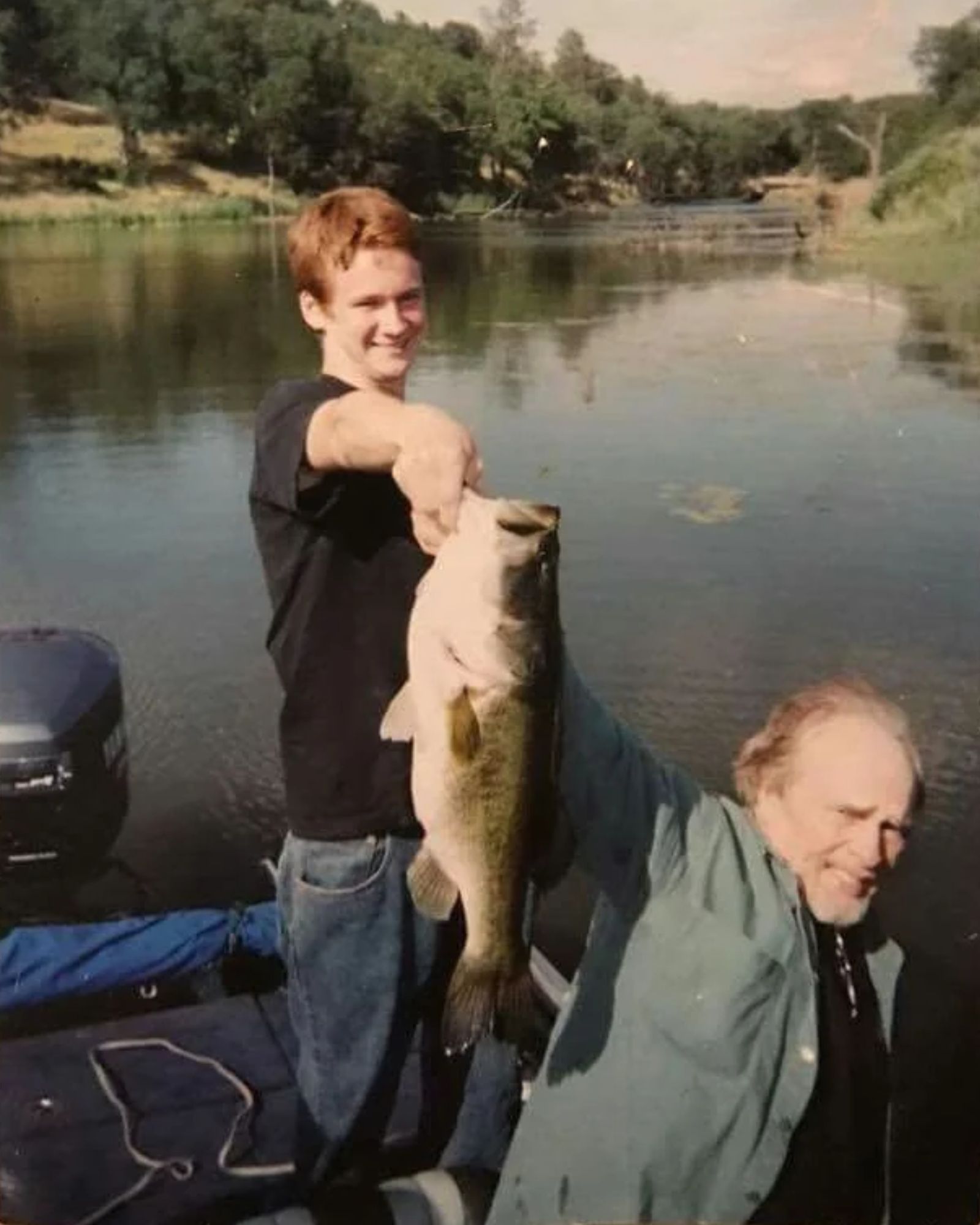
When Ben Haggard was just four years old, Ben Haggard asked his father a question that most children of famous musicians would probably understand.
“Since you’re famous, does that make me famous too?”
Merle Haggard had a simple answer: “Son, you’ve got to create your own thunder.”
It was a childhood conversation that Ben Haggard would remember for years. At the time, Ben Haggard was only beginning to understand that Merle Haggard was someone special beyond their family. Much later, those words would become one of the most important lessons Merle Haggard ever passed down.
Growing Up Beside a Country Music Legend
Music was part of Ben Haggard’s life almost from the beginning. At six years old, Ben Haggard received a Fender guitar that had once belonged to Roy Nichols, Merle Haggard’s longtime guitarist. Ben Haggard would later recall discovering the instrument without realizing how important its history was.
By the age of 15, Ben Haggard was playing lead guitar with The Strangers, the legendary band that had accompanied Merle Haggard for decades.
For years, Ben Haggard watched Merle Haggard perform, learning not only the music but also how to handle an audience, deliver a song, and carry the responsibilities that came with life on the road.
But playing guitar behind Merle Haggard was one thing. Becoming a singer in Ben Haggard’s own right would be another challenge entirely.
The Final Recording They Made Together
On February 9, 2016, Merle Haggard recorded “Kern River Blues” at the family studio in California. Ben Haggard played electric guitar on the recording.
The song looked back on Merle Haggard’s years in Bakersfield, the California city so closely connected with the music that made Merle Haggard famous.
It would become Merle Haggard’s final studio recording.
On April 6, 2016, less than two months later, Merle Haggard died on Merle Haggard’s 79th birthday.
Ben Haggard was left with more than memories and a remarkable collection of songs. Merle Haggard had encouraged Ben Haggard to take the guitar, the touring bus, and the opportunity to continue performing the music audiences still wanted to hear.
Ben Haggard followed that advice. Alongside Noel Haggard and The Strangers, Ben Haggard returned to the road, helping preserve the music that had defined a generation of country fans.
Yet Merle Haggard’s earlier advice remained equally important. Continuing the family legacy was not supposed to prevent Ben Haggard from finding an individual musical identity.
Why “Footlights” Became So Personal
One song would eventually bring those two responsibilities together.
It was “Footlights,” originally released on Merle Haggard’s 1979 album Serving 190 Proof.
The song describes a professional musician facing the complicated emotions of performing night after night. There is applause, public recognition, and the satisfaction of making music. But there is also the private reality of having to entertain an audience regardless of what is happening in the performer’s personal life.
In a 2005 interview with All About Jazz, Merle Haggard identified “Footlights” as one of the songs Merle Haggard felt especially proud of writing. Merle Haggard explained that it described the life of a working musician more personally than almost anything else in the catalog.
At the time, those words reflected Merle Haggard’s own experiences after decades onstage.
But after 2016, the song acquired another meaning for Ben Haggard.
During an August 2017 interview, Ben Haggard explained that “Footlights” had changed for Ben Haggard following Merle Haggard’s death. Ben Haggard now understood the song as the experience of a performer who must walk onstage and give people a worthwhile show, even while dealing with heartbreak or missing someone deeply.
It was no longer simply a song Ben Haggard had heard his father sing. It described something Ben Haggard was experiencing personally.
A Father’s Legacy and a Son’s Own Voice
There is something remarkable about the connection between those two interviews, separated by twelve years.
In 2005, Merle Haggard explained why “Footlights” described the realities of a life spent entertaining audiences.
In 2017, Ben Haggard explained why the same song had become meaningful after losing the man who wrote it.
The lyrics had not changed. The circumstances surrounding the music had.
And perhaps that is what makes Ben Haggard’s journey so memorable. Merle Haggard encouraged Ben Haggard to carry on the family music while also developing a voice that belonged to Ben Haggard alone.
The songs provided a connection to the past. The advice provided a direction for the future.
Years after that childhood conversation, Ben Haggard was discovering that creating your own thunder did not necessarily mean leaving your father’s music behind. Sometimes it meant finding something personal and honest to say through the songs your father had left you.
If you could hear Ben Haggard perform just one of Merle Haggard’s songs, which one would you choose?