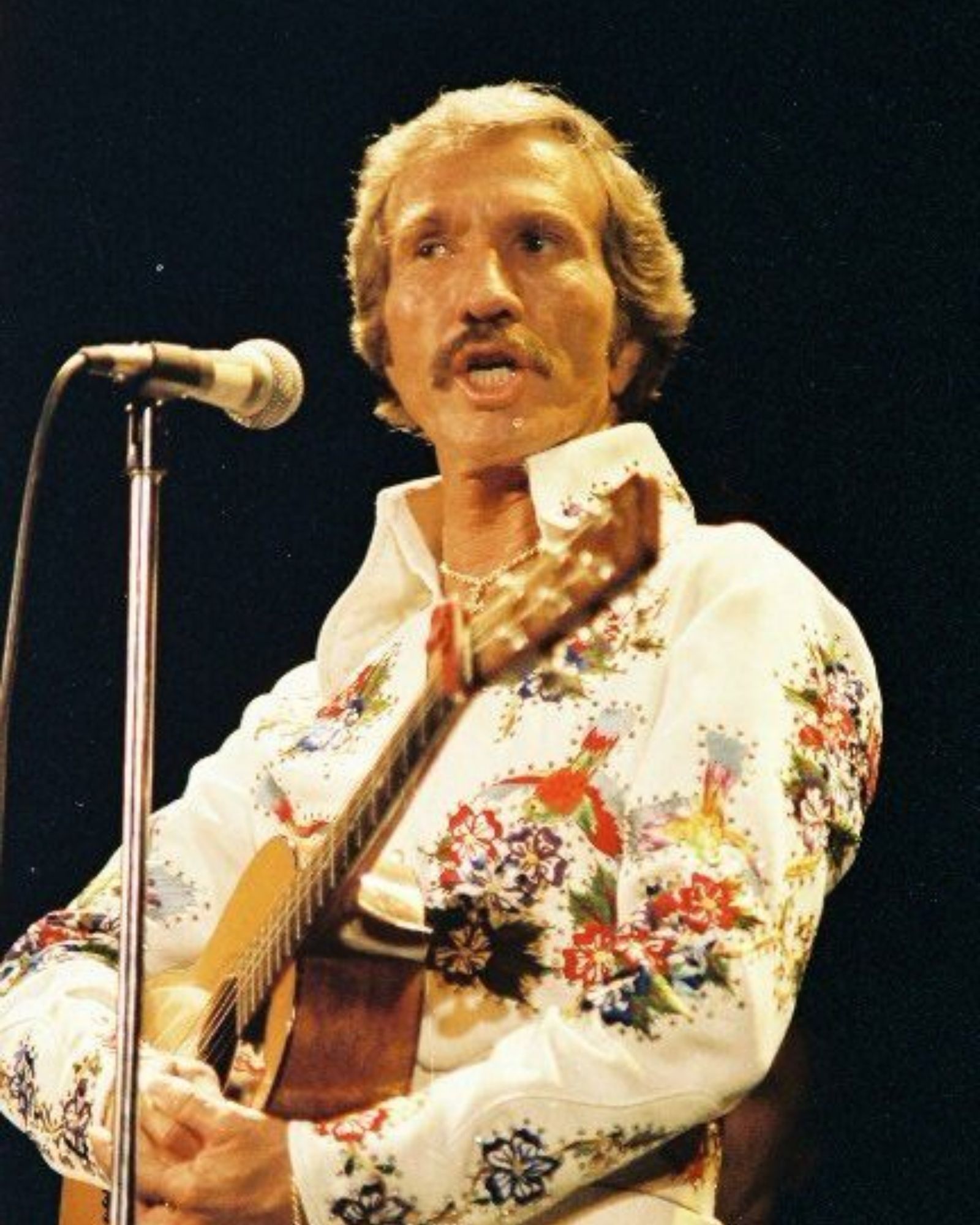
In 1959, Marty Robbins recorded a cowboy song that ran four minutes and 37 seconds. That was unusually long for a country single, and Columbia Records had reason to worry that radio stations wouldn’t give it much airtime.
The song was “El Paso,” a story about a gunfighter, a beautiful woman named Felina, jealousy, and a fatal decision. Instead of a typical love song, Marty Robbins had written something that played out almost like a Western movie.
Columbia Records eventually released a shorter version to accommodate radio. But listeners preferred the complete recording, and the song became one of the biggest successes of Marty Robbins’ career.
The Song That Took Three Trips Through El Paso
The story actually began years before the recording session.
In December 1955, Marty Robbins was traveling to Phoenix, Arizona, for Christmas when a sign announcing El Paso caught Marty Robbins’ attention. The name sounded romantic and seemed perfect for a Western song.
But before the car had passed through town, Marty Robbins had forgotten the idea.
The following Christmas, Marty Robbins remembered the previous year’s inspiration while passing through El Paso again. Once more, the idea disappeared before anything was written.
In 1957, during another family trip, everything finally came together. While Marty Robbins’ wife drove their turquoise Cadillac, Marty Robbins sat in the back seat and began developing the story that would become “El Paso.”
Years later, Marty Robbins recalled that the lyrics and melody seemed to arrive together. What made the experience unusual was that Marty Robbins didn’t know how the story would end while creating it.
The tale unfolded as the song took shape. By the time the family reached Phoenix, Marty Robbins had a complete Western ballad to remember and write down.
Why Columbia Records Was Concerned
Marty Robbins had loved Western stories since childhood. Growing up near Phoenix, Marty Robbins admired singing cowboy Gene Autry and regularly attended Western movies.
By the late 1950s, Marty Robbins was already an established country star, known for hits including “Singing the Blues” and “A White Sport Coat (And a Pink Carnation).”
But Marty Robbins wanted to record an album devoted to traditional Western music rather than the more familiar country material that had brought commercial success.
Producer Don Law eventually agreed to the project, although Marty Robbins reportedly had little expectation that the album would sell well.
On April 7, 1959, Marty Robbins recorded all 12 songs for Gunfighter Ballads and Trail Songs during a single eight-hour studio session.
Among those recordings were “Big Iron,” “The Master’s Call,” and the centerpiece, “El Paso.” Guitarist Grady Martin contributed the distinctive guitar sound that helped give “El Paso” its Mexican border atmosphere.
The Shorter Version That Listeners Didn’t Prefer
When Columbia released Gunfighter Ballads and Trail Songs in September 1959, “El Paso” quickly attracted attention.
Producer Don Law released the song as a single on October 26, 1959, with “Running Gun” on the other side.
Its length remained a problem for conventional radio programming. Columbia therefore made a shorter version available, removing a verse from the original recording. The shortened performance also appeared on the stereo edition of the album.
But the full-length version had something the edit couldn’t completely preserve: the uninterrupted story.
Listeners preferred the longer recording, and Marty Robbins continued performing the song without cutting it down. The complete tale remained four minutes and 37 seconds long.
The Cowboy Story That Conquered Country and Pop Radio
By December 1959, “El Paso” had reached No. 1 on Billboard’s country chart. Around the beginning of 1960, it also reached the top of the pop chart, giving Marty Robbins a remarkable crossover success.
The recording later won a Grammy for Best Country & Western Performance.
What Columbia Records had considered unusually long for radio had become a hit across two major musical audiences.
And the song’s success lasted far beyond its original release. In 1976, Marty Robbins returned to the setting with “El Paso City,” another No. 1 country hit.
Shortly before Marty Robbins died in December 1982, Marty Robbins described “El Paso” as a personal favorite and explained that performing it night after night never became tiresome.
In 2016, the Library of Congress selected Gunfighter Ballads and Trail Songs for the National Recording Registry, recognizing the album’s lasting cultural and musical importance.
For generations of country fans, “El Paso” has remained more than an old radio favorite. It’s a complete Western story that listeners can follow from the first verse to the final moments.
And more than six decades after Columbia tried shortening it, the full four-minute, 37-second recording remains the version that tells the story the way Marty Robbins intended.